Trap Arm Length Limits
The Diagnosis: Understanding Trap Arm Length
A trap arm length, also called the trap-to-vent distance, is the maximum allowable horizontal developed length of drain pipe between a fixture trap’s weir and its protecting vent. Exceeding this limit causes the trap to siphon or self-siphon, breaking the water seal and allowing sewer gases to enter the living space. This is a fundamental code compliance and system functionality issue in plumbing design and installation.
Technical Deep Dive: Calculating and Installing a Compliant Trap Arm
The maximum trap arm length is not arbitrary; it is a function of pipe diameter and slope, governed by physics to prevent the critical loss of the trap seal. The installation must be precise.
Step-by-Step Determination & Installation
- Step 1: Identify Fixture Drain Size. Determine the required minimum pipe diameter for the fixture (e.g., 1-1/4″ for a lavatory, 1-1/2″ for a kitchen sink, 2″ for a shower). This is per Table 709.1 of the IPC.
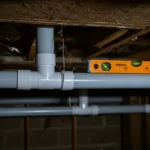
- Step 2: Establish Correct Slope. Set the drain pipe with a uniform slope of 1/4 inch per foot (2% grade). This is the fall per foot mandated by code for pipes 3″ in diameter and smaller. Use a quality torpedo level or a laser level for accuracy.
- Step 3: Calculate Maximum Length. Apply the code’s trap arm length table. For a standard 1-1/2″ drain at 1/4″ per foot slope, the maximum developed length is 42 inches. This is measured from the trap weir (the crown of the trap’s outlet) to the vent fitting’s centerline.
- Step 4: Avoid Prohibited Configurations. Ensure the drain does not drop vertically immediately after the trap, creating an illegal S-trap. The vent connection must occur before any vertical drop in the drain line.
- Step 5: Secure and Test. Support the pipe per code intervals (every 4 feet for 1-1/2″ plastic pipe). After installation, run water to test the drain and verify the trap retains its seal.
Code & Compliance: The Governing Standards
Adherence to plumbing codes is non-negotiable for safety and system integrity. The following are key citations from the International Plumbing Code (IPC), the most widely adopted model code in the USA.
Trap Arm Length Table (IPC 908.1)
| Size of Trap and Drain (inches) | Maximum Distance from Trap to Vent (feet) |
|---|---|
| 1 1/4 | 2 ft. 6 in. (30″) |
| 1 1/2 | 3 ft. 6 in. (42″) |
| 2 | 5 ft. (60″) |
| 3 | 6 ft. (72″) |
| 4 | 10 ft. (120″) |
Critical Note: These distances assume the pipe is sized for the fixture, has a slope of 1/4″ per foot, and is the developed length (the total length along the centerline of the pipe, including bends).
S-Trap Prohibition (IPC 1002.1 & UPC 1002.1)
S-traps are explicitly prohibited. An S-trap occurs when the drain pipe drops vertically immediately after the trap, creating a double-seal that is highly susceptible to siphonage. The code requires that the vent connection must be within the allowable trap arm distance before the drain line drops vertically into a stack or branch. This is why a properly vented P-trap is the only acceptable configuration.
Fall per Foot (IPC 704.1)
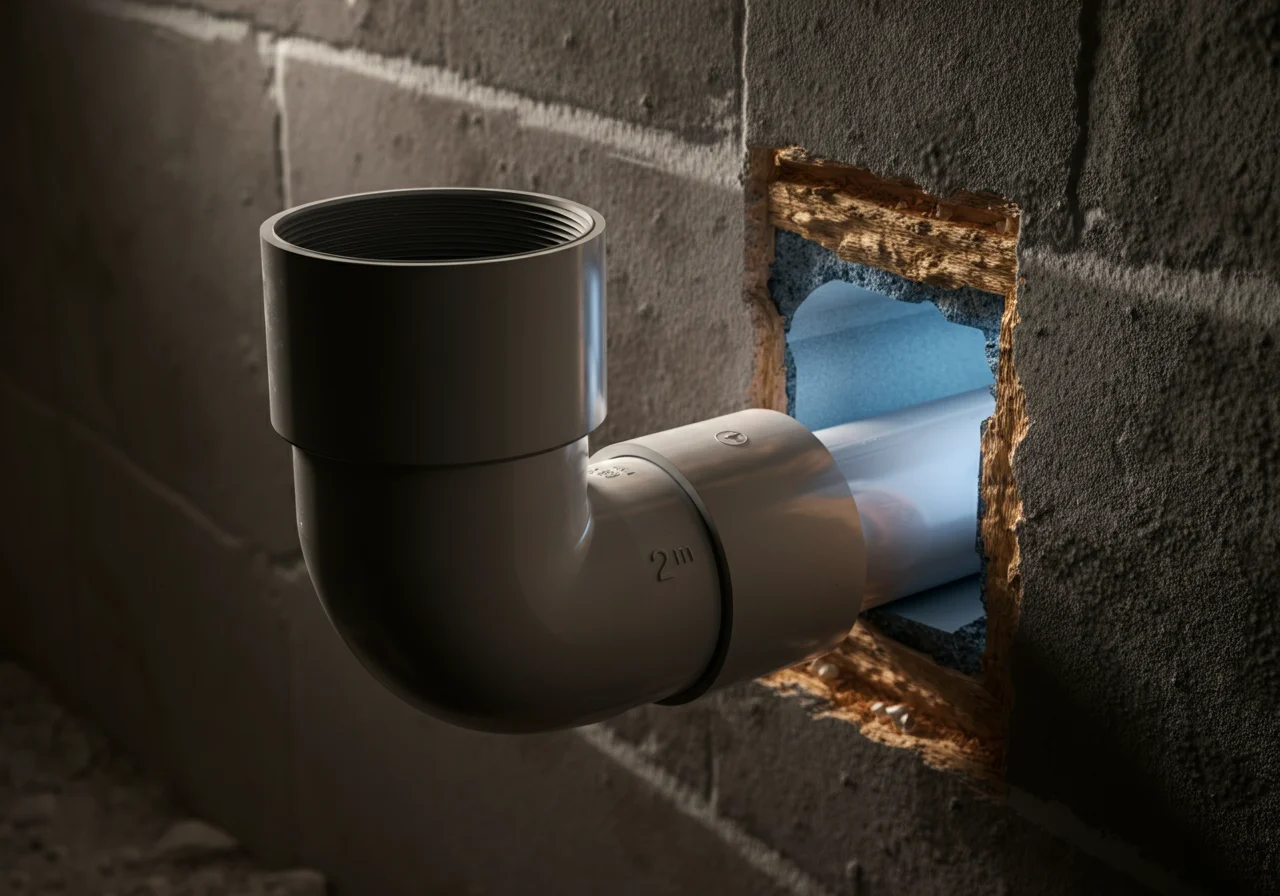
“Horizontal drainage piping shall be installed in uniform alignment at uniform slopes.” For pipes 3 inches in diameter and smaller, the slope shall be not less than 1/4 inch per foot (2 percent) and not more than 1/2 inch per foot. Slope is critical; too little slope allows waste to stagnate, while excessive slope causes liquids to outrun solids, leading to clogs and potential siphonage of the trap.
Toolbox: Essential Gear for Precision
- Measuring & Leveling: A 24-inch level (like Milwaukee’s Torpedo Level) is indispensable for setting the precise 1/4″ per foot slope. A quality tape measure is required for measuring developed length.
- Cutting & Fitting: For plastic pipe (PVC/ABS), a Ridgid plastic pipe cutter ensures clean, square cuts. A deburring tool is mandatory to prevent obstructions that can affect flow.
- Diagnostics: While not a direct install tool, a Fluke multimeter is critical for ensuring power is off when working near electrical for garbage disposals or dishwashers.
Safety Warning
ALWAYS verify that the main water supply is shut off before cutting into any existing drainage system. When working in proximity to electrical outlets or fixtures (e.g., under-sink disposals), turn off the circuit at the breaker panel and confirm it is de-energized with a non-contact voltage tester. Sewer gases are hazardous; ensure proper venting during pressure testing and never leave an open drain line unattended.
External Reference
For the definitive engineering principles behind trap seal loss and venting requirements, consult the foundational research published by the American Society of Plumbing Engineers (ASPE). Their data informs all modern plumbing codes.
American Society of Plumbing Engineers (ASPE).