PEX A vs PEX B Tools
The Diagnosis: PEX A vs. PEX B Tooling and Performance
Choosing between PEX A vs PEX B Tools is a fundamental decision that dictates your installation method, tool investment, and the long-term hydraulic performance of the plumbing system. The core distinction lies in the connection method: PEX-A uses a cold expansion system requiring specialized tools, while PEX-B typically uses crimp or clamp rings. This choice directly impacts flow rates, reliability, and the installer’s workflow.
Technical Deep Dive: System Mechanics and Installation
The installation process for each PEX type is fundamentally different, driven by the material’s molecular memory and the required fitting.
PEX-A (Expansion System)
- Process: A manual or battery-powered expansion tool (e.g., Milwaukee M12, Ridgid RP 340-B) stretches the PEX-A tubing and a proprietary PEX-A expansion fitting. The expanded tubing is slipped over the fitting, where it contracts with powerful elastic recovery to form a 360-degree, full-diameter seal.
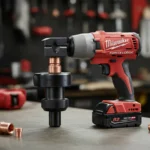
- Tooling: Requires an expansion tool and specific expansion ring fittings. Manual expanders are cost-effective for small jobs; cordless hydraulic expanders (like those from Milwaukee or Uponor) are standard for professional efficiency.
- Key Advantage: The joint is made before the water pressure is applied, creating a stress-free connection. The expanded tubing fully recovers, gripping the fitting.
PEX-B (Crimp/Clamp System)
- Process: A copper crimp ring or stainless steel clamp is placed over the tubing. The tubing is inserted onto a standard brass or polymer insert fitting, and the ring is compressed using a crimping tool (e.g., Ridgid) or a cinch tool, creating a mechanical compression seal.
- Tooling: Requires a crimping/cinching tool and go/no-go gauges for calibration. Tools are generally less expensive than PEX-A expansion tools but are specific to ring type (crimp vs. clamp).
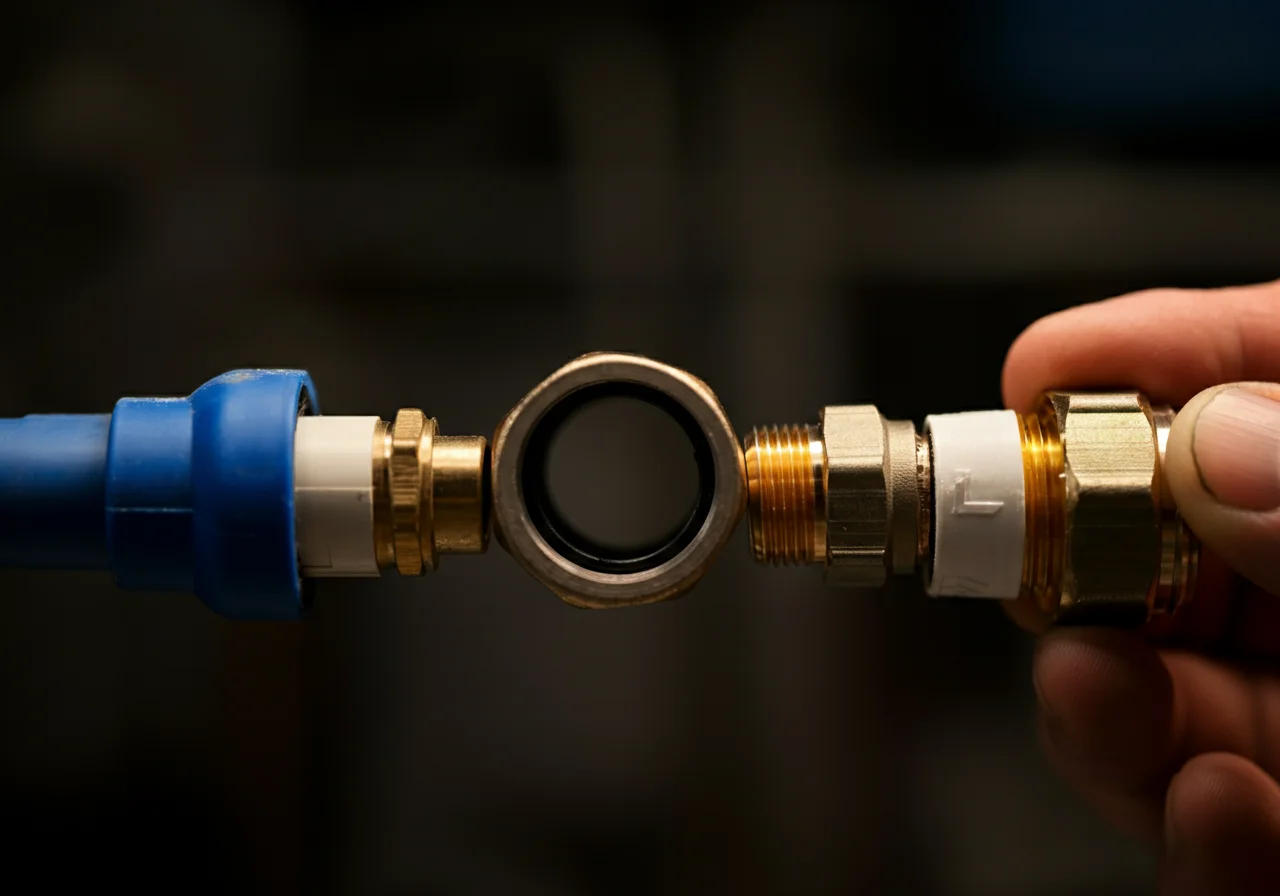
- Key Consideration: The fitting remains inside the tubing, creating a potential flow restriction. The seal relies on constant mechanical force from the ring.
| Feature | PEX-A (Expansion) | PEX-B (Crimp/Clamp) |
|---|---|---|
| Primary Tool | Expansion Tool (Manual or Power) | Crimping Tool or Cinch Tool |
| Fitting Type | Expansion Fitting (no internal grip ring) | Insert Fitting with Crimp/Clamp Ring |
| Connection Seal Mechanism | Molecular Memory & Elastic Recovery | Mechanical Compression |
| Approx. Tool Cost (Pro-Grade) | $400 – $1,200+ | $100 – $300 |
| Freeze Damage Resistance | Superior (tubing can expand and contract) | Good, but fitting is a rigid point of failure |
Flow Restriction Analysis: Hydraulic Impact
The debate on Flow Restriction is critical for system design. PEX-A expansion fittings have a smooth, uninterrupted internal diameter that matches the tubing, minimizing turbulence and pressure drop. PEX-B insert fittings have a shoulder that reduces the internal diameter at every connection point.
- Engineering Data: Studies show PEX-B insert fittings can create a localized restriction equivalent to increasing the pipe length by 0.5 to 1.5 feet per fitting for pressure loss calculations. In systems with numerous fittings, this can compound to a measurable loss in flow rate and pressure.
- Practical Implication: For simple residential branch lines, the difference may be negligible. In complex manifold systems, commercial applications, or where maximizing flow is paramount (e.g., multi-fixture showers), the full-bore design of PEX-A expansion fittings provides a hydraulic advantage.
Code & Compliance
Both systems are approved under major US plumbing codes, but installation must follow specific manufacturer instructions and code mandates.
- International Plumbing Code (IPC) & Uniform Plumbing Code (UPC): Both reference ASTM standards F1960 (Expansion PEX-A) and F1807 (Crimp/Cinch PEX-B). The installer is responsible for using the correct, calibrated tool listed for the specific tubing and fitting combination.
- Critical Code Point (UPC 2021, Section 604.13): “Joints between polyethylene plastic tubing and fittings shall be installed in accordance with the manufacturer’s instructions.” Using a PEX-B crimp tool on PEX-A tubing, or vice-versa, is a direct code violation and creates a failed joint.
- Supporting Standard (ASTM F877): This is the core standard for PEX tubing material itself, which both types must meet. For more on material standards, refer to the ASTM F877 specification.
Toolbox: Professional Equipment Recommendations
Investing in reliable, code-compliant tools is non-negotiable.
- For PEX-A: A cordless expansion tool like the Milwaukee M12 FORCE LOGIC or Uponor ProPEX Expander offers speed and consistency. Always carry a manual expander as a backup.
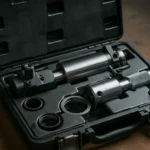
- For PEX-B: A ratcheting crimp tool from Ridgid (model 101 or 102) with a go/no-go gauge ensures proper calibration. For clamp systems, a dedicated cinch tool like the IAPMO R&T listed RIDGID model is required.
- Universal Essential: A high-quality tubing cutter (e.g., Ridgid) and a deburring tool are mandatory for both systems to ensure a clean, square cut.
⚠️ Safety & Best Practice Warning
1. System Pressure: Always shut off the main water supply and relieve all pressure in the line before cutting or disassembling any PEX connection. 2. Tool Verification: Verify tool calibration daily with a go/no-go gauge for crimp systems. For expansion tools, ensure jaws are not worn and are compatible with the tubing size. 3. Inspection: Visually inspect every connection before pressurizing the system. A proper PEX-A joint will have no visible gap; a proper crimp ring will be uniformly compressed. 4. Pressure Test: Conduct a 24-hour pressure test per IPC/UPC requirements (typically 1.5x working pressure) on all new installations before concealing pipes.
Conclusion: Selecting the Right System
The choice between PEX A vs PEX B Tools hinges on project scale, budget, and performance requirements. PEX-A with expansion tools offers superior flow, freeze resistance, and a reliable cold-expansion joint, justifying a higher initial tool cost for high-volume or performance-critical installs. PEX-B with crimp/clamp tools provides a lower barrier to entry with proven reliability for standard residential applications, though with a slight hydraulic trade-off. Regardless of choice, strict adherence to manufacturer instructions, code compliance, and proper tool use is the foundation of a leak-free, durable plumbing system.
External Reference: For an authoritative overview of cross-linked polyethylene (PEX) material science and its applications, consult the Plastic Pipe Institute (PPI), a major technical authority for plastic piping systems.