Thread Sealant Tape
The Diagnosis: Thread Sealant Tape is Not a Universal Product
Thread Sealant Tape, commonly called Teflon tape or PTFE tape, is a consumable used to create a pressure-tight seal on threaded pipe connections. The critical failure point for tradespeople is assuming all tapes are equal. Using the wrong density or type on a specific application—especially gas lines—is a direct path to leaks, code violations, and hazardous conditions. This guide details the technical specifications of white, pink, blue, and yellow PTFE tapes, focusing on material density and gas line compliance.
Technical Deep Dive: PTFE Tape Specifications by Color & Density
PTFE tape color is a manufacturer’s code for density and intended use, not a universal standard. Density, measured in grams per cubic centimeter (g/cc) or often indicated by thickness and strand count, determines the tape’s resistance to system pressure and media.
Step-by-Step Tape Selection & Application
- 1. Identify the Media and Pressure: Is it potable water, compressed air, natural gas/LP, oxygen, or chemicals? System pressure (PSI) is critical.
- 2. Select by Density/Color Code: Use the table below as your primary guide. Do not substitute.
- 3. Prepare the Threads: Clean all male threads with a wire brush to remove debris and old sealant. Threads must be dry.
- 4. Apply Tape Correctly:
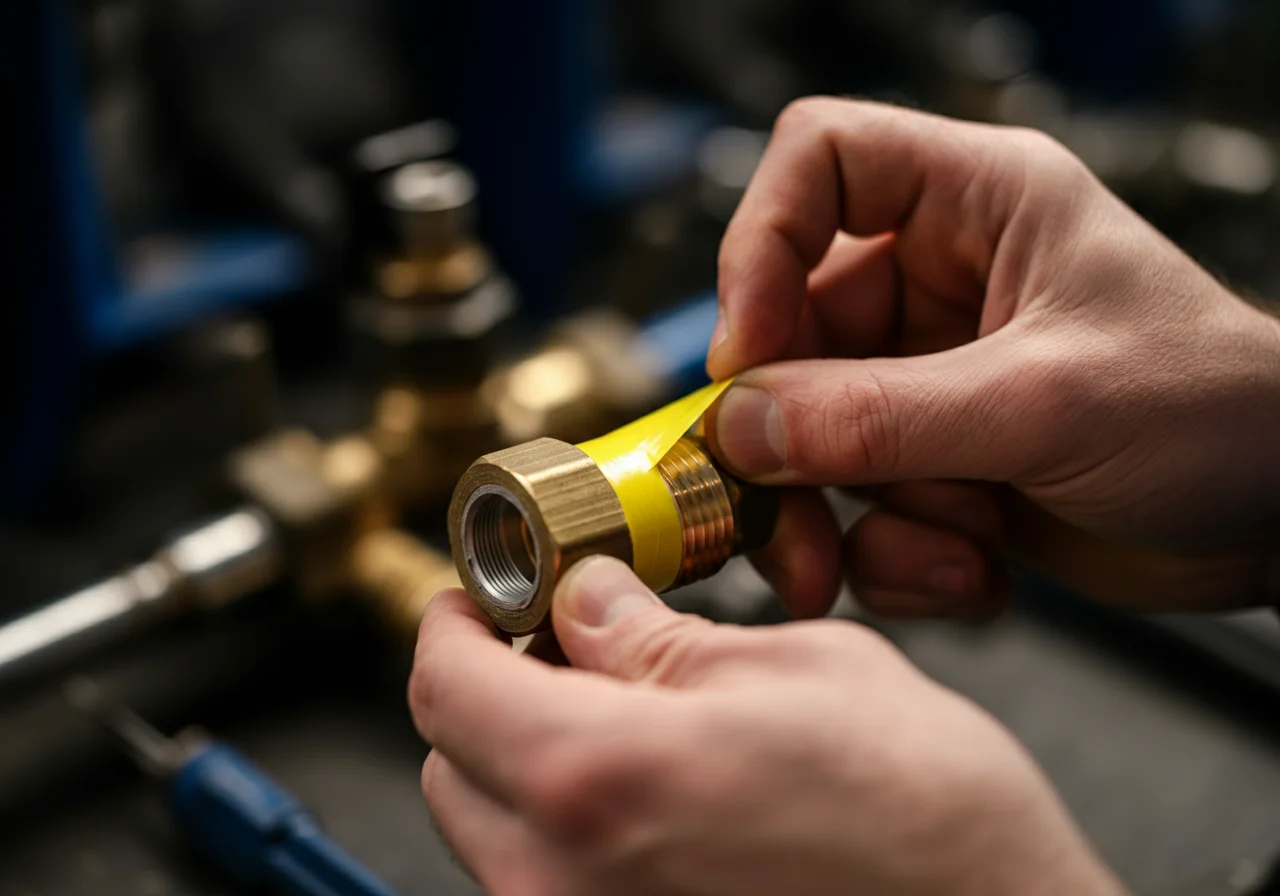
- Hold the fitting end facing you. Start wrapping on the second thread, leaving the first thread exposed.
- Wrap in the direction of the threads (clockwise for standard right-hand threads). Overlap each wrap by 50%.
- Use 3-4 wraps for standard tape, 2-3 for high-density tape. The goal is a clean seal, not bulk.
- Do not cover the end of the pipe, as tape shreds can enter the system.
- 5. Assemble and Torque: Hand-tighten, then use appropriate tools (e.g., Ridgid pipe wrenches) to achieve proper engagement. Over-tightening can compromise the seal.
PTFE Tape Comparison Table
| Color | Common Density | Standard Thickness | Primary Use & Pressure Rating | Key Technical Note |
|---|---|---|---|---|
| White | Standard (Low) Density | ~3.5 mils | Low-pressure water lines (< 150 PSI), general plumbing. NOT for gas, oxygen, or chemicals. | Economical grade. Often single-ply; can tear easily. Never use on gas. |
| Pink | Medium/High Density | ~4.0 mils | Potable water lines. Often marketed as “water system” or “professional grade.” | Higher strand count than white. May contain additives for easier handling. Not for gas. |
| Blue (Monster) | High Density | ~5.0 mils | High-pressure water, compressed air, and some chemical applications. | Denser, more robust. Check manufacturer specs for chemical compatibility. Not listed for fuel gas. |
| Yellow (Gas Line) | High Density, Gas-Rated | ~4.0 – 5.0 mils | Natural Gas and Propane (LP) lines ONLY. Typically rated for specific fuel gases. | MUST be marked as meeting ASTM D 3308, MIL-T-27730A, or similar. The ONLY PTFE tape for fuel gas threads. |
Code & Compliance: Gas Lines Are Non-Negotiable
Using the correct thread sealant is a code-mandated safety issue for fuel gas systems.
- International Fuel Gas Code (IFGC) 2021, Section 403.6: “Pipe joint compounds and tapes shall be approved for the application and shall be applied to the male threads only.” The term “approved” means listed for fuel gas.
- Uniform Plumbing Code (UPC) 2021, Section 1210.2: “Thread seal tape shall not be used on flare fittings. Thread seal tape, when used on threaded joints, shall be listed in accordance with ASTM D 3308.”
- Critical Interpretation: “Yellow” color alone is insufficient. The tape spool must be clearly printed with its listing for fuel gas (e.g., “For use on NPT threads for NATURAL GAS and PROPANE”). Inspectors will check this. Using white, pink, or blue tape on a gas line is a direct code violation and an extreme safety hazard, as these tapes can degrade with hydrocarbon exposure.
Toolbox: Essential Tools for Professional Thread Work
- Pipe Wrenches: Use two Ridgid aluminum pipe wrenches (one as a backup) to prevent stress on the system.
- Thread Cleaning Tools: A Ridgid pipe cleaning brush or a 3-in-1 tubing cutter/deburrer/reamer is essential for proper thread preparation.
- Leak Detection: For gas, use a commercial, non-corrosive, leak detection fluid (soap solution) in a spray bottle. For precise electronic detection, a Fluke combustible gas leak detector provides digital verification.
External Reference: Manufacturer & Standards Data
For definitive specifications on PTFE material properties and gas line standards, consult primary sources:
- ASTM D3308 Standard Specification for PTFE Tape for Threading Sealing – This is the governing standard for fuel gas PTFE tape.
Final Technical Note: Teflon Density and Gas Line Safety
The term “Teflon Density” refers to the compactness of the polytetrafluoroethylene (PTFE) matrix. Higher-density tapes (yellow, blue) have longer polymer chains and better resistance to cold flow (deformation under pressure and over time). Natural gas and propane are small-molecule hydrocarbons that can permeate standard-density tapes. Only listed high-density yellow tape is formulated to resist this permeation and maintain a seal. Never use pipe dope or tape not explicitly rated for the specific media in the pipe. Your sealant is your primary leak barrier—select it with the same precision as you would a valve or fitting.