Viega vs Nibco Press
The Diagnosis: A Systems-Level Comparison of Press Fitting Giants
For professional plumbers and HVAC technicians, the choice between **Viega vs Nibco** press systems is a critical decision impacting job efficiency, long-term system integrity, and tool investment. This is not a simple brand preference; it’s a technical evaluation of two distinct sealing philosophies and their associated hardware. The core of the debate centers on their proprietary **press fittings** and the crucial, non-interchangeable **jaw compatibility** of their pressing tools, a factor that locks a contractor into one ecosystem. Understanding the mechanics behind the **double press** and single-press methodologies is essential for selecting the right system for your specific applications, from residential plumbing to complex commercial hydronic systems.
Technical Deep Dive: Sealing Mechanisms & Tool Interfacing
The fundamental difference between Viega and Nibco lies in how they achieve a permanent, leak-free seal. Here’s a step-by-step breakdown of the technology and installation process for each.
Viega’s Single-Press (Pressfit) System
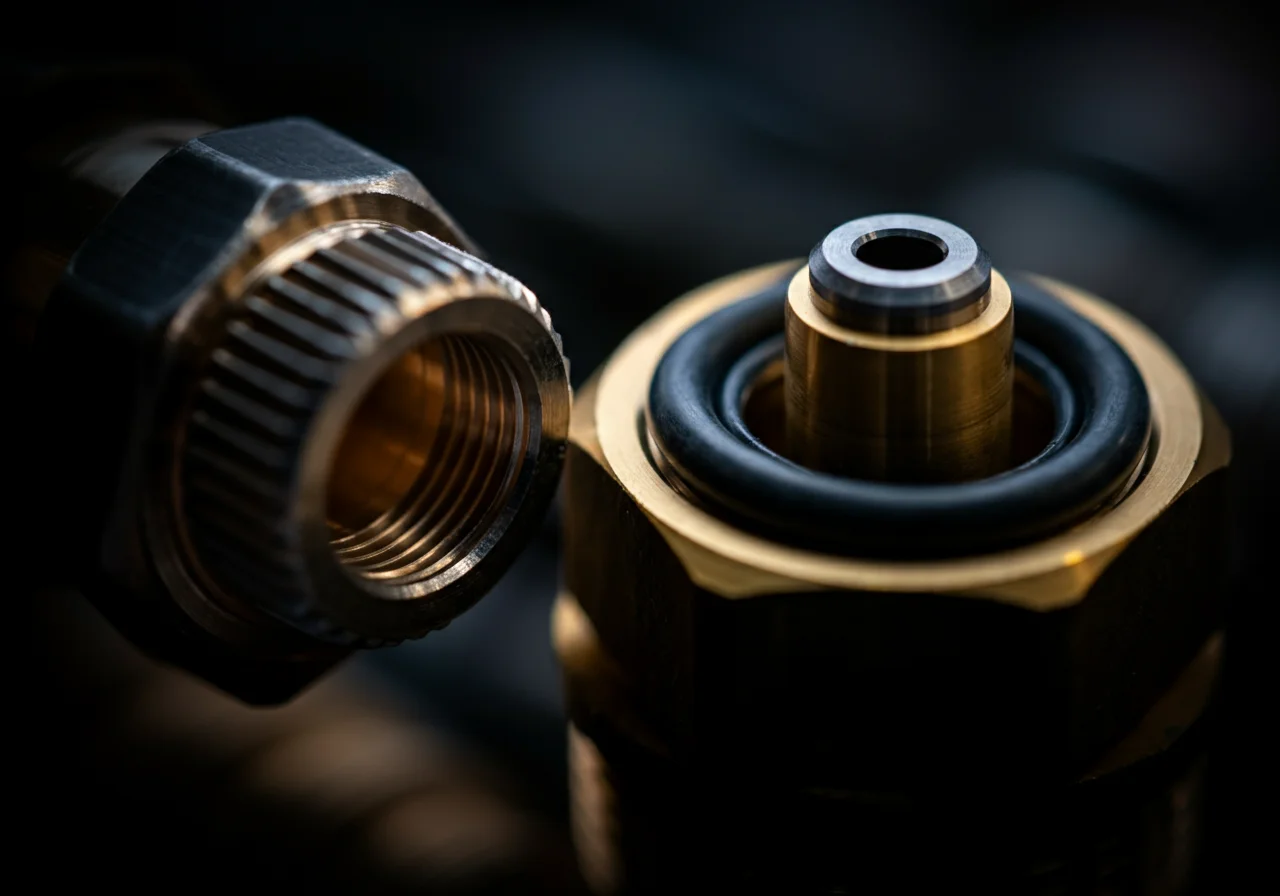
- Sealing Mechanism: Viega fittings use a single EPDM (Ethylene Propylene Diene Monomer) O-ring seated in a precision-machined groove. The pressing action permanently deforms the copper or stainless steel sleeve over the pipe and into a calibration bead, compressing the O-ring to create a seal.
- Installation Process:
- Cut the pipe square using a dedicated tube cutter (e.g., Ridgid) to ensure a clean, burr-free end.
- Deburr the ID and OD of the pipe.
- Mark the pipe insertion depth using the provided gauge.
- Insert the pipe into the fitting until it bottoms out.
- Use a Viega-specific press jaw (e.g., from a Milwaukee M12 or M18 Force Logic press tool) to crimp the fitting. The tool’s jaw engages the fitting’s raised press indicators, applying uniform radial pressure.
- A complete press is confirmed when the tool’s jaw fully closes and the press indicators are visibly flattened.
Nibco’s T-Drill & Double-Press (Tectite) System
- Sealing Mechanism: Nibco’s Tectite system employs a two-stage approach. The fitting contains two separate sealing elements: a primary grab ring (a stainless steel grip ring) and a secondary EPDM O-ring.
- The Double Press Process: This is the defining feature.
- Follow identical pipe prep steps: cut, deburr, and mark depth.
- Insert the pipe into the Tectite fitting.
- First Press: The press tool, equipped with Nibco-specific jaws, is positioned on the primary press zone. This press engages the grab ring, permanently locking the pipe to the fitting and providing mechanical strength.
- Second Press: The jaws are then moved to the secondary press zone, located closer to the center of the fitting. This second press compresses the O-ring against the pipe to form the watertight or gas-tight seal.
- Key Distinction: The separation of the gripping and sealing functions is designed to isolate the O-ring from pipe stress and potential torsional movement, which proponents argue enhances long-term reliability.
| Feature | Viega Pressfit | Nibco Tectite |
|---|---|---|
| Core Sealing Method | Single-Press with Integrated O-ring | Double-Press with Isolated Grab Ring & O-ring |
| Jaw Compatibility | Viega-specific jaws. Will NOT work on Nibco fittings. | Nibco-specific jaws. Will NOT work on Viega fittings. |
| Visual Confirmation | Flattened press indicators on the fitting. | Two sets of flattened press indicators. |
| Typical Tool Brand Examples | Milwaukee, Ridgid, Viega (tool heads) | RIDGID (RP 341), Rothenberger (with Nibco jaws) |
| Common Material Applications | Copper, Stainless Steel, PEX (via adapters) | Copper, Stainless Steel, Carbon Steel |
Code & Compliance: Meeting the Standard
Both systems are engineered to meet or exceed rigorous US plumbing and mechanical codes. Their listings are your assurance of compliance.
- International Plumbing Code (IPC) & Uniform Plumbing Code (UPC): Both Viega Pressfit and Nibco Tectite fittings carry certifications from IAPMO (International Association of Plumbing and Mechanical Officials) and are listed under UPC Standard 806-6 for press-connect joints. This listing is critical for permitting and inspection.
- International Mechanical Code (IMC): Approved for hydronic (heating/cooling) and HVAC applications.
- National Fire Protection Association (NFPA): Specific lines from both manufacturers are listed for fire sprinkler (NFPA 13) and gas piping (NFPA 54/IFGC) applications. Critical: You MUST use the fittings explicitly listed and marked for the specific service (e.g., gas, oxygen, medical gas). Never assume a standard water fitting is approved for gas.
- OSHA & Jobsite Safety: The press method itself significantly reduces torch time, lowering the risk of fire (29 CFR 1926.352) and inhalation hazards in confined spaces compared to soldering or brazing.
⚠️ Safety Warning: Mandatory Pre-Work Protocol
Before any installation: 1) SHUT OFF THE WATER SUPPLY at the main and drain the relevant line. 2) For gas line work, SHUT OFF THE GAS SUPPLY at the meter or tank and purge the line with an inert gas per code. 3) In retrofit applications, VERIFY PIPE COMPATIBILITY—not all press systems are approved for all pipe types or conditions (e.g., existing soft solder). 4) Always wear ANSI-approved safety glasses during cutting and pressing operations.
Toolbox: The Investment Decision
Your choice between **Viega vs Nibco** is also a choice in power tool platform. The jaws are not interchangeable, making the initial tool purchase a long-term commitment.
- Viega Ecosystem: Often paired with popular cordless platforms like the Milwaukee M18 Force Logic. Jaws are color-coded (e.g., red for 1/2″ to 1″ copper) and must match the fitting size and material exactly.
- Nibco Ecosystem: Tools like the RIDGID RP 341 are common. The double-press requires a tool capable of the two distinct press positions. Technicians must carry and use the correct jaw sets for the first and second press.
- Verification: High-end tools from brands like Fluke (for multimeters) are unrelated to pressing but are critical for post-installation system checks, such as verifying electrical continuity on bonding for CSST gas lines.
Pro Tip: Consider future service work. If the local supply house predominantly stocks one brand, or if you frequently work on systems already installed with one brand, matching that ecosystem simplifies repairs and ensures you have the correct jaws on your truck.
External Reference for Technical Standards
For a definitive, third-party reference on the performance standards governing these mechanical joints, consult the International Association of Plumbing and Mechanical Officials (IAPMO) standard. This document outlines the testing protocols for pressure, temperature cycling, and longevity that all listed press systems must pass.
IAPMO Technical Resources & Standards (UPC 806-6)
Conclusion: Selecting Your System
The **Viega vs Nibco** debate lacks a universal “best” answer. It requires a technical assessment of your needs:
- Choose Viega Pressfit for its streamlined, single-press speed, widespread availability, and extensive product range for pure plumbing and hydronics. Its simplicity reduces the chance of installer error (a missed second press).
- Choose Nibco Tectite for applications where the theoretical advantage of an isolated, stress-relieved O-ring seal is paramount, or for specific gas line projects where their listed products fit the spec. The double-press adds a deliberate, verifiable two-step process.
Ultimately, both are code-listed, professional-grade systems. The decisive factors will be local supplier support, the existing systems you maintain, and your confidence in the respective tooling platform. Invest in the system you can source, install, and warranty with certainty.