Pressing Gas Lines
The Diagnosis: Pressing Black Iron Gas Pipe
Pressing gas lines with specialized mechanical fittings is a modern alternative to threaded joints for black iron (carbon steel) pipe. This method requires a specific tool, precise jaws, and strict adherence to manufacturer and code requirements to ensure a permanent, leak-free seal on fuel gas systems. The core technical challenge is applying the correct calibrated force to deform a fitting onto the pipe without compromising the system’s integrity.
Technical Deep Dive: Procedure for Pressing Black Iron Gas Pipe
Success depends on correct preparation, tool selection, and execution. Do not use PEX or copper pressing tools or jaws on gas pipe.
- Step 1: Pipe Preparation. Cut the carbon steel pipe square using a rotary cutter or band saw. Deburr the ID and OD thoroughly using a heavy-duty deburring tool. The pipe end must be clean, round, and free of scratches, paint, oil, and thread compound. Measure and mark the pipe for proper insertion depth into the fitting.
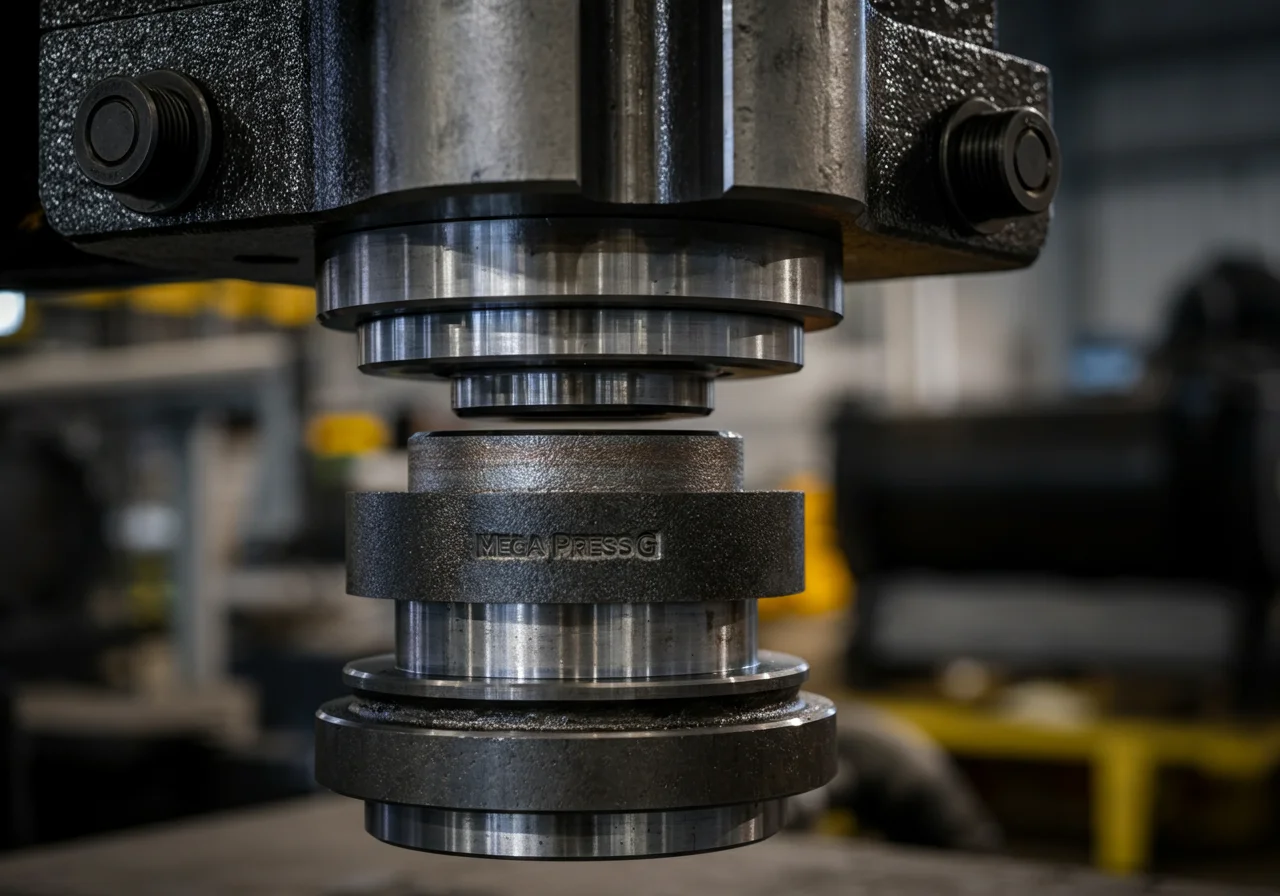
- Step 2: Fitting & Tool Selection. Use only fittings listed for fuel gas and compatible with pressing, such as MegaPress G. Select the correct jaw set for the specific tool model and the exact pipe size (e.g., 1/2″, 3/4″). Jaws are typically color-coded and stamped with the size. For example, Ridgid Press Jaws for MegaPress G are black. Verify jaw compatibility in the tool manual.
- Step 3: Assembly and Pressing. Slide the fitting onto the pipe until it bottoms out. Position the correctly sized jaws into the Milwaukee M18 FORCE or equivalent press tool. Align the tool’s indenters with the pressing zones marked on the fitting. Ensure the tool is perpendicular to the pipe. Activate the press. The tool will apply a calibrated, thousands-of-pounds force to create a uniform radial compression. A complete cycle is confirmed by an audible click or tool indicator.
- Step 4: Inspection. Visually inspect the pressed joint. The pipe should be visibly swaged behind the fitting’s grip ring. Check that the pressing indentations are uniform and centered on the fitting’s press zones. The fitting must not be rotated after pressing.
Code & Compliance: Fuel Gas Pressing Standards
Mechanical pressed joints for gas are governed by plumbing and fuel gas codes, which reference specific product standards.
- International Fuel Gas Code (IFGC) & International Plumbing Code (IPC): Section 1211.1 permits joints and fittings to be “installed in accordance with the manufacturer’s instructions.” This makes the manufacturer’s listed installation procedure legally part of the code.
- Underwriters Laboratories (UL) Listing: Press fittings for gas, like MegaPress G, must be UL Listed under Category GPYR (Gas and Corrosive Fluid Pipe and Fitting). The installer must verify the UL mark on the fitting.
- ASTM A53/A106: This standard covers the seamless and welded carbon steel pipe suitable for pressing with systems like MegaPress. Pipe must meet Schedule 40 or 80 dimensions and have a yield strength compatible with the pressing force.
Toolbox: Essential Equipment for Gas Pressing
| Tool Category | Specific Requirement | Example Brands/Products |
|---|---|---|
| Press Tool | Hydraulic or battery-powered press tool with sufficient force rating (e.g., 60,000+ psi) for carbon steel. | Milwaukee M18 FORCE, Ridgid RP 350 |
| Jaws | Jaws specifically listed for “MegaPress G” or “Carbon Steel Gas.” Never use copper or stainless steel jaws. | Ridgid Press Jaws for MegaPress G (Black) |
| Pipe Prep | Rotary pipe cutter (for clean, square cuts) and heavy-duty deburring tool for Schedule 40/80 steel. | Ridgid 2-4″ Quick-Acting Tube Cutter, Wheeler Rex Deburring Tool |
| Inspection | Go/No-Go gauge to verify proper pressing depth and jaw alignment. Required by many manufacturer instructions. | Viega or Ridge Tool Company Gauge |
Critical Focus: MegaPress G System and Carbon Steel Compatibility
The MegaPress G system from Ridge Tool Company is engineered specifically for black iron and carbon steel fuel gas lines. Its fittings use a patented sealing element and grip ring designed for the hardness and surface characteristics of carbon steel. The pressing process cold-works the pipe and fitting together, creating a metal-to-metal seal. The carbon steel pipe must be uncoated (no galvanizing) and free of longitudinal seams in the pressing area. The system is approved for natural gas and LP systems up to the pressures stated in its UL listing, typically 5 psi (14″ WC) for most residential applications and higher for certain commercial uses.
Safety Warning & Best Practices
WARNING: Before working on any gas line, you MUST shut off the gas supply at the meter or tank, verify shutoff with a manometer or soap solution, and purge the line of gas in a well-ventilated area following OSHA confined space procedures if applicable. Never press a live or pressurized line.
- Always perform a post-installation leak test per code (typically with a manometer at 10″ WC or more for 10 minutes).
- Do not use pipe dope or thread sealant on the pipe ends before pressing; it can compromise the seal.
- Store jaws clean and dry. Inspect jaws for wear, cracks, or deformation before each use. Worn jaws will not apply proper force and can cause a failed joint.
- Ensure the press tool battery is fully charged. An incomplete press cycle due to low power is a critical failure.
External Reference for Technical Standards
For a definitive guide on mechanical joining systems for piping, consult the American Society of Mechanical Engineers standard, which outlines design and performance principles. You can review the scope of ASME B16.51, which covers continuous weld copper and copper alloy pressure fittings, a related standard that informs the engineering behind press technology: ASME B16.51 Standard Details.