Firestopping Code
The Diagnosis: Understanding Firestopping Code for Pipe Penetrations
Firestopping code is the set of regulations governing the sealing of openings created by pipes, conduits, and other penetrations in fire-rated walls, floors, and ceilings. Its purpose is to restore the compromised fire-resistance rating of the assembly, preventing the spread of flames, smoke, and toxic gases. A failure in firestopping can render an otherwise compliant fire-rated wall useless in an emergency. For plumbing and HVAC professionals, compliance with firestopping code is non-negotiable and requires understanding approved materials like intumescent sealants and collars, proper installation techniques, and the relevant sections of the International Building Code (IBC) and International Fire Code (IFC).
Technical Deep Dive: System Components and Installation
Effective firestopping is a system, not just a product. The correct assembly depends on the type of penetration, the materials involved, and the required fire-resistance rating (e.g., 1-hour, 2-hour).
- Step 1: Assess the Penetration
Identify the fire-rated assembly (e.g., 2-hour gypsum board wall) and the penetrating item (e.g., 2″ PVC drain pipe, 3″ steel vent). Note the annular space—the gap between the pipe and the edge of the opening. Code typically limits this space; the IBC often references a maximum, which your specific tested assembly will dictate. - Step 2: Select the Approved System
You must use a firestop system that has been tested and listed by a recognized testing agency (UL, FM, Warnock Hersey) for the exact scenario. Do not mix and match unapproved products. For plastic (thermoplastic) pipes like PVC or CPVC, an intumescent material is almost always required. - Step 3: Prepare the Opening
The penetration must be clean, dry, and free of debris, oil, or loose material. For metallic pipes, light abrasion may be needed for adhesion. The rated wallboard or structure must be intact around the opening. - Step 4: Install the Firestop System
- Intumescent Caulk/Sealant: This is the most common material. It remains soft but expands dramatically (char and swell) when exposed to heat, sealing the annular space as the plastic pipe melts away. Apply per the manufacturer’s instructions, typically tooling it to ensure full contact with both the pipe and the wall substrate. It must fill the entire depth of the assembly.
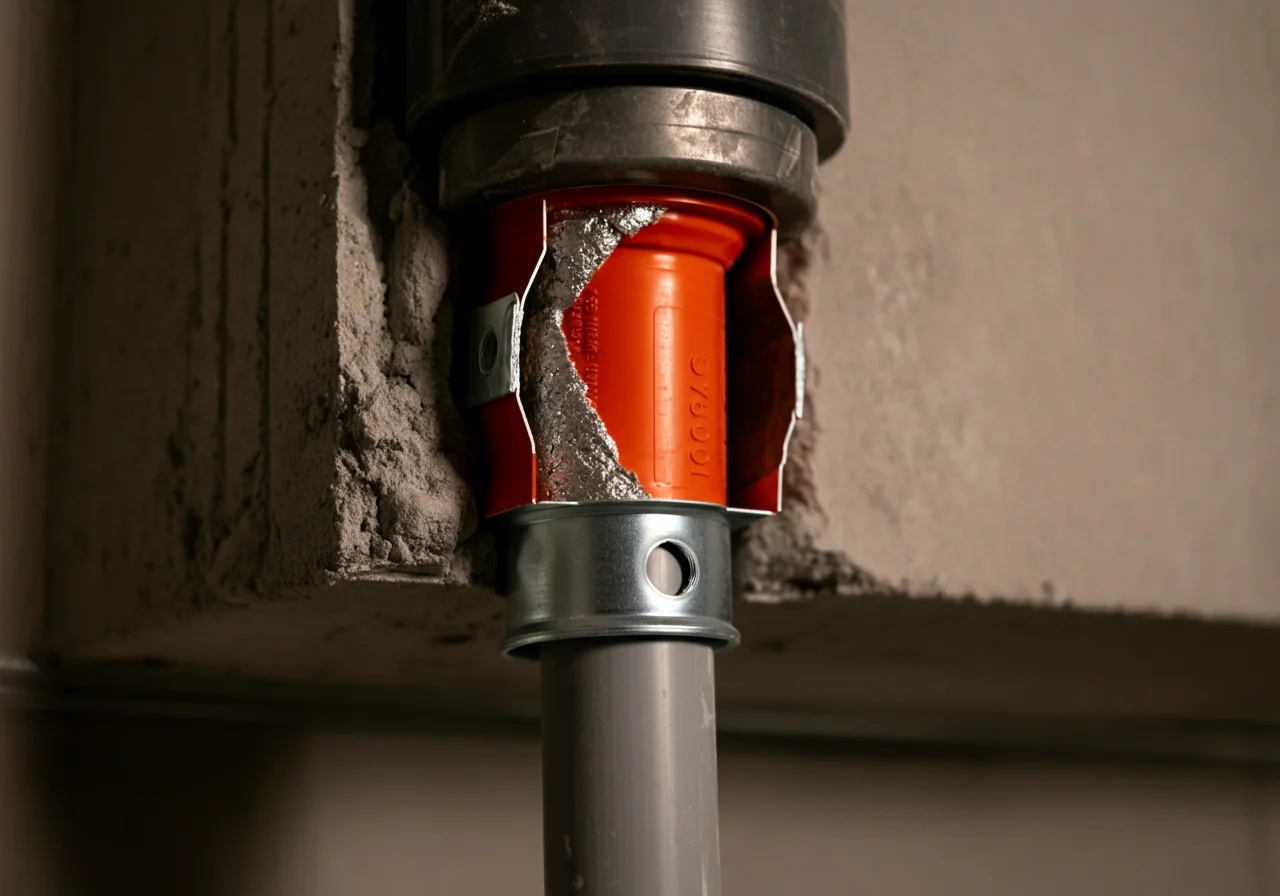
- Firestop Collars/Wraps: These are physical devices, often containing intumescent material within a metal or plastic housing. They are clamped or secured around the pipe on one or both sides of the wall. They provide a more defined and sometimes higher-rated solution, especially for larger pipes or where movement is expected.
- Pillows/Putty: Often used for temporary seals or in electrical applications, these can be molded into irregular openings.
- Step 5: Inspection and Documentation
After installation, the work should be documented, often with photos, for the building inspector. The specific listing information (e.g., UL System F-FS-XXXX) should be available on-site.
Code & Compliance: The Regulatory Framework
Firestopping is not a suggestion; it is a legally mandated part of the building code. Key references include:
- International Building Code (IBC) Chapter 7: Fire and Smoke Protection Features
Section 714 addresses fire-resistant joint systems and firestop systems. IBC 714.3 states that penetrations must be protected by an approved firestop system installed as tested per ASTM E814 or UL 1479, achieving an F Rating (flame through) equal to the floor or wall assembly. - International Fire Code (IFC) Chapter 7
Mirrors IBC requirements and is often used by fire marshals during inspections of existing buildings. - Underwriters Laboratories (UL) Fire Resistance Directory
This is the essential guide for finding tested and listed systems. You search by wall/floor type, penetration type, and required rating to find the specific product or system you must use.
Critical Rule: Plastic pipe penetrations in fire-rated walls require a tested system that accommodates the pipe’s melting. The intumescent material expands to fill the void left by the melted pipe, maintaining the fire barrier.
Toolbox: Essential Tools for Professional Installation
While specialized, the tools for firestop installation are straightforward. Quality ensures a compliant seal.
| Tool | Purpose | Example Brands |
|---|---|---|
| Caulking Gun (Sausage/Bulk Load) | For applying firestop sealant from large cartridges. A smooth-rod gun provides consistent pressure. | Milwaukee, Albion Engineering |
| Putty Knives & Trowels | For tooling and smoothing sealant, ensuring full contact and a proper finish. | Red Devil, Marshalltown |
| Utility Knife & Brushes | For cleaning openings, cutting sealant cartridges, and abrading surfaces. | Olfa, Empire |
| Torque Wrench or Driver | For installing firestop collars to the manufacturer’s specified torque settings. | Ridgid, DeWalt |
Safety Warning & Best Practices
SAFETY WARNING: Firestopping work often occurs in active construction or renovation sites. Always be aware of overhead hazards, use appropriate PPE (gloves, safety glasses), and ensure the work area is ventilated when using chemical products. Verify that all utilities (electrical, water) in the immediate work area are controlled or shut off before beginning.
Best Practices:
- Never Use Standard Caulk or Spray Foam: These are combustible and will fail immediately in a fire.
- Follow the Listing Exactly: The tested assembly specifies pipe size, annular space, depth, and product. Deviation voids the listing and is a code violation.
- Account for Pipe Movement: In seismic zones or for pipes subject to thermal expansion, use a listed system designed for movement.
- Inspect Existing Penetrations: During renovations, old, failed, or missing firestop is a common finding and must be corrected.
External References for Further Authority
For the definitive test standards that underpin all firestop system listings, refer to the official summary from UL: UL 1479 Standard for Fire Tests of Through-Penetration Firestops. This outlines the rigorous fire and hose stream test procedures a system must pass to be listed.