T&P Valve Leaking Fix
The Diagnosis: Understanding T&P Valve Leakage
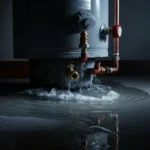
A T&P (Temperature and Pressure) relief valve leaking is a critical diagnostic signal from your water heater. It indicates one of two primary conditions: a normal, controlled release due to thermal expansion in a properly functioning system, or a failure mode requiring immediate intervention. Distinguishing between the two is essential for system safety and longevity. This guide provides the technical steps to diagnose and resolve the issue correctly.
Technical Deep Dive: Step-by-Step Diagnosis and Resolution
Begin by identifying the leak’s characteristics. Is it a constant drip, a periodic discharge during or after a heating cycle, or a steady stream? Your observation dictates the next steps.
Step 1: Initial Safety and Assessment
- SAFETY WARNING: Before any inspection, shut off power to an electric water heater at the circuit breaker or turn the gas control valve to “Pilot” on a gas unit. Shut off the cold water supply inlet to the heater.
- Place a bucket under the T&P valve discharge pipe to catch water.
- Manually lift the valve’s test lever briefly to flush any sediment that may be preventing a tight seal. Often, mineral scale holds the valve disc open. If the leak stops after this, the issue was likely debris.
- If the leak persists, proceed to pressure testing.
Step 2: Testing System Pressure and the Expansion Tank
Excessive system pressure is the most common cause of a weeping T&P valve. This is where understanding the expansion tank bladder is critical.
- Tool Required: A standard tire pressure gauge (for diaphragm-type expansion tanks) and a water pressure test gauge that attaches to a hose bib or the heater drain valve.
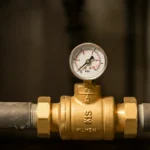
- Test Static Water Pressure: Attach the pressure gauge to an outdoor hose bib or the water heater drain valve (with water supply on). Record the pressure. Residential pressure should typically be between 40-80 psi.
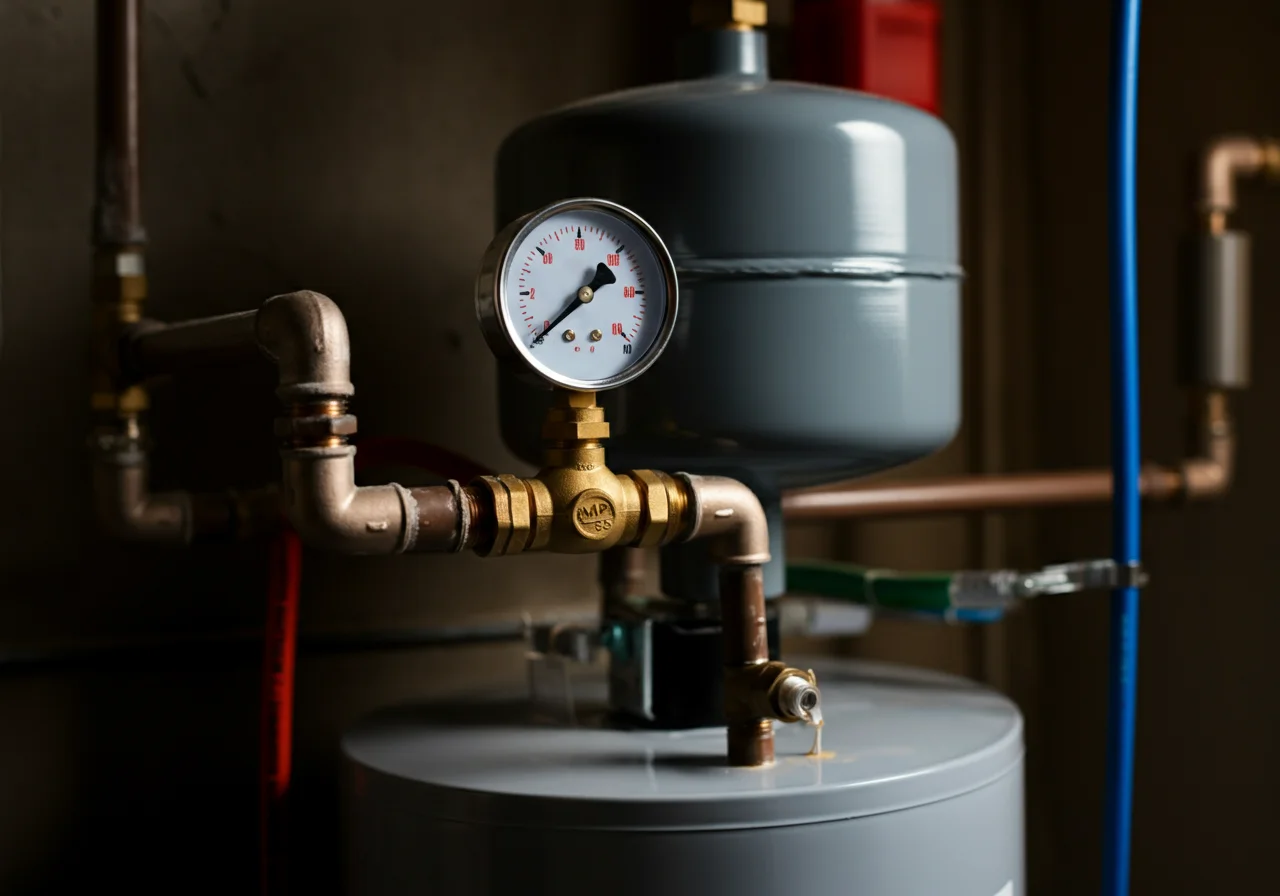
- Test Expansion Tank Pre-charge: With the water supply OFF and pressure relieved from the tank (open a faucet), check the air pressure at the expansion tank’s Schrader valve. It must match the static water pressure. If it reads 0 psi, the bladder has failed and the tank is waterlogged.
- Diagnosis: A failed or under-charged expansion tank cannot absorb the expanded water volume from heating, causing system pressure to spike and open the T&P valve. This causes periodic dripping or discharge.
Step 3: Testing the T&P Valve and Temperature
If system pressure is normal (≤80 psi) and the expansion tank is functional, the valve itself or excessive temperature may be at fault.
- Temperature Check: Use a thermometer at a hot water faucet. Water temperature should not exceed 120°F for safety (140°F max for some applications, but with mandatory anti-scald devices).
- Valve Test: With a bucket under the discharge pipe, fully lift the T&P valve test lever. It should discharge vigorously and stop completely when released. If it continues to leak or discharges weakly, the valve has failed internally and must be replaced. DO NOT cap or plug the valve.
Step 4: Replacement Procedure for T&P Valve or Expansion Tank
- For T&P Valve: After shutting off power, water, and relieving pressure, drain the heater slightly. Use a proper socket wrench (e.g., Ridgid pipe wrench) to unthread the old valve. Apply pipe dope or Teflon tape to the threads of the new valve (check manufacturer instructions). Install and tighten. The new valve must have the same temperature and pressure rating (typically 150 psi, 210°F).
- For Expansion Tank: Shut off water, isolate the tank with a valve if present, and drain it. Unscrew it from its fitting. Pre-charge the new tank with air to match your home’s static water pressure before installation. Install using a robust pipe wrench (e.g., Milwaukee) and ensure it is supported.
Code & Compliance
Adherence to plumbing codes is non-negotiable for safety and legality.
- IPC/UPC (International/Uniform Plumbing Code): Both mandate a T&P relief valve on all storage water heaters (IPC 504.6, UPC 510.3). The discharge pipe must be of approved material (CPVC, copper, PEX listed for hot water), be the same size as the valve outlet, terminate within 6-24 inches of the floor, and not be directly connected to a drain.
- Thermal Expansion Control: IPC 607.3 and UPC 608.3 require a means to control thermal expansion (like an expansion tank) when a pressure-reducing valve, check valve, or backflow preventer is installed on the water supply system, creating a “closed system.”
- OSHA/NEC: Electrical work must comply with the National Electrical Code (NEC). Always verify power is locked out before servicing.
Toolbox
Using professional-grade tools ensures accurate diagnosis and safe repair.
| Tool | Purpose | Example Brand |
|---|---|---|
| Water Pressure Test Gauge | Accurately measure static and dynamic water pressure. | Ashcroft, Watts |
| Tire Pressure Gauge | Check and set expansion tank air pre-charge. | Accutire |
| Pipe Wrench | Remove and install T&P valves and expansion tanks. | Ridgid |
| Multimeter | Verify power is OFF at electrical connections. | Fluke |
External References
For definitive technical specifications and safety standards, consult primary sources.
- OSHA Standard 1910.147 – The Control of Hazardous Energy (Lockout/Tagout). This is the federal standard for safely de-energizing equipment before service.
- Consult the installation manual for your specific water heater model (e.g., AO Smith, Rheem, Bradford White) for torque specifications and approved component ratings.
Final Safety Note: A T&P valve is a safety device. If it is leaking due to failure, replace it immediately. If it is discharging due to over-pressure or over-temperature, you must correct the root cause (failed expansion tank, faulty thermostat, etc.). Bypassing or removing this valve creates an extreme explosion hazard.