Anode Rod Types Explained
Anode Rod Types: The Technical Guide to Corrosion Protection
An anode rod is a sacrificial component within your water heater tank, designed to corrode in place of the steel tank lining through a process called cathodic protection. Selecting the correct anode rod type—magnesium, aluminum, or zinc—is a critical maintenance decision that directly impacts tank longevity, water quality, and system efficiency. This guide provides the technical data and application criteria needed to make an informed choice based on your local water chemistry.
The Diagnosis: Corrosion, Sediment, and Odor
Premature tank failure, excessive sediment buildup, and a persistent rotten egg smell (hydrogen sulfide) are often symptoms of an exhausted or incorrectly specified anode rod. The rod’s core function is to be consumed by electrolytic corrosion, protecting the tank. When it fails, the tank corrodes, sediment from the corroding rod can accumulate, and in certain water conditions, bacteria can interact with the rod material to produce foul odors.
Technical Deep Dive: Anode Rod Chemistry & Selection
The choice of anode material is dictated by water conductivity, which is primarily influenced by water hardness (mineral content) and sulfate levels. Using the wrong type accelerates failure or creates new problems.
Step 1: Assess Your Water Supply
- For Soft Water (Low TDS/Conductivity): Use a Magnesium Anode. Magnesium has a high electrochemical potential (-1.6V vs. Cu/CuSO4), making it highly “active” and effective in low-conductivity water. It is the standard for most municipal supplies.
- For Hard Water (High TDS/Conductivity): Use an Aluminum Anode (typically an aluminum-zinc-tin alloy). Aluminum has a lower potential (-1.1V), providing a slower, more controlled sacrifice in highly conductive water, preventing overly rapid consumption.
- For High Sulfate Water or “Rotten Egg Smell”: Use a Zinc or Zinc-Aluminum Anode. Zinc ions are bacteriostatic and can suppress sulfate-reducing bacteria that produce hydrogen sulfide gas. This is a direct corrective action for odor.
Step 2: Inspection and Replacement Protocol
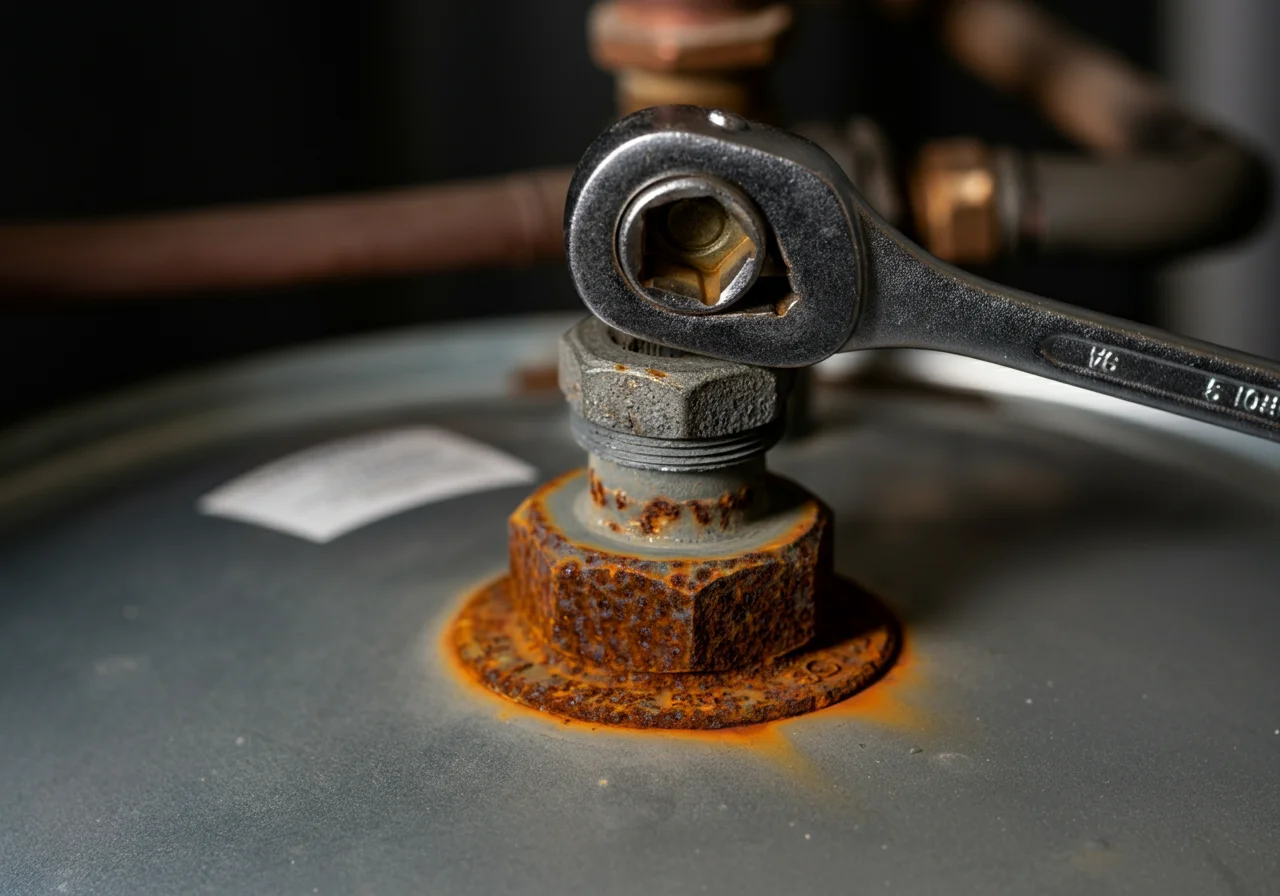
- Tool Required: A 1-1/16″ deep socket (Ridgid or Milwaukee), breaker bar, Teflon tape, and a garden hose.
- Procedure: Shut off power (breaker) and water supply. Drain 10-15 gallons from the tank. Remove the old rod from the top of the tank. Inspect: if less than 1/2″ of core wire remains or it’s heavily crusted, replace it.
- Installation: Wrap threads of new rod with Teflon tape, insert, and torque to manufacturer specification (typically 15-20 ft-lbs). Do not overtighten.
| Anode Type | Electrochemical Potential | Best For Water Type | Primary Advantage | Potential Drawback |
|---|---|---|---|---|
| Magnesium | High (-1.6V) | Soft to Moderately Hard | Superior protection in standard water; fastest sacrifice. | Can over-sacrifice in very hard water; may increase sediment. |
| Aluminum Alloy | Low (-1.1V) | Hard / High Conductivity | Longer life in hard water; cost-effective. | Less driving voltage; can cause odor in sulfate-rich water. |
| Zinc / Zinc-Aluminum | Medium (-1.2V) | High Sulfate / Odor Problems | Suppresses sulfur bacteria; eliminates rotten egg smell. | Moderate protection level; may not be ideal for very soft water. |
Code & Compliance
While plumbing codes (IPC/UPC) do not mandate anode rod types, they universally require water heaters to be protected from corrosion to ensure vessel integrity—a core function of the anode. The National Electrical Code (NEC) Article 250 governs grounding and bonding of metallic water piping systems. Critical Note: The anode rod is a bonded component of this system. Never replace a standard anode with a non-metallic or “corrosion-free” rod without consulting a licensed professional, as it can break the electrical continuity required for a safe bonded system, creating an electrocution hazard.
Toolbox
- Socket & Breaker Bar: A 1-1/16″ deep impact socket (Milwaukee) and a quality breaker bar are non-negotiable for breaking the factory torque.
- Multimeter: A Fluke multimeter can be used to check for proper tank grounding and bonding continuity after service.
Safety Warning
Before any service, you MUST shut off the electrical supply at the circuit breaker or the gas supply at the shut-off valve. Shut off the cold water inlet and relieve pressure by opening a hot water faucet. Water in the tank is SCALDING HOT (120°F+). Allow time for the tank to cool before draining. Failure to follow these steps can result in severe injury or death from electrocution, explosion, or burns.
External Reference
For a detailed scientific explanation of cathodic protection and galvanic series, refer to the technical definition from Wikipedia’s Galvanic Series entry. This resource provides the foundational electrochemistry behind anode rod operation.
Addressing Secondary Issues: Sediment and Odor
Sediment Buildup
Sediment is often mineral scale (calcium carbonate) from hard water, combined with corrosion byproducts from a spent anode. A rapidly corroding magnesium rod in hard water can exacerbate this. Solution: Match the anode to water hardness (use aluminum for hard water) and perform an annual tank flush via the drain valve to evacuate sediment, which improves efficiency and reduces noise.
Rotten Egg Smell (Hydrogen Sulfide)
This odor is caused by sulfate-reducing bacteria in the tank that thrive on certain anodes and produce H₂S gas. Aluminum anodes can sometimes promote this. Solution: Replace the existing anode with a zinc-aluminum composite rod. The zinc ions create an inhospitable environment for the bacteria. For persistent cases, a hydrogen peroxide shock treatment of the tank (per manufacturer guidelines) may be necessary before installing the new zinc anode.
Final Technical Recommendation: Obtain a local water quality report to determine hardness (grains per gallon) and sulfate content. For soft, low-sulfate water: Magnesium. For hard water (>7 gpg): Aluminum Alloy. For any odor issue: Zinc-Aluminum. Inspect the rod every 3-5 years. This proactive, chemistry-based approach is the most effective method to maximize the service life of your water heater investment.