Backdrafting Water Heater
The Diagnosis: Identifying a Critical Venting Failure
A backdrafting water heater is a dangerous and code-violating condition where combustion exhaust gases, including lethal carbon monoxide (CO), spill from the draft hood into the living space instead of being completely expelled through the flue vent. This failure in the natural draft system is often caused by negative indoor air pressure competing with the buoyancy of hot flue gases. Immediate diagnosis and correction are non-negotiable for safety.
Technical Deep Dive: The Smoke Test Protocol
The definitive field test for a backdrafting water heater is the smoke test at the draft hood. This procedure identifies even subtle venting failures that may not be obvious.
Step-by-Step Smoke Test Procedure
- Preparation: Ensure the water heater is in normal operation (heating cycle). Turn off all exhaust fans (bathroom, kitchen range hood), close windows and exterior doors. Do not disturb normal household activities like dryer operation during the test, as these are real-world conditions.
- Tool Selection: Use a commercial smoke pencil or a cold smoke match. Avoid incense sticks, as their thermal plume can create false readings.
- Test Execution: Carefully bring the smoke source to the edge of the draft hood opening, avoiding direct contact with the flue diverter. Observe the smoke movement for a full minute.
- Pass: All smoke is steadily drawn up into the vent.
- Fail (Spillage): Smoke is pushed out of the hood into the room. This is active backdrafting.
- Fail (Pressurization): Smoke hesitates, wavers, or is only partially drawn. This indicates a weak draft susceptible to failure.
- Negative Pressure Test: Repeat the test with all house exhaust fans turned on. This simulates worst-case depressurization and is required by many inspectors.
Code & Compliance: The Legal and Safety Framework
Venting is governed by strict mechanical and fuel gas codes. Failure to comply creates liability and life-safety hazards.
| Code (IPC/IFGC) | Relevant Section | Requirement |
|---|---|---|
| International Fuel Gas Code (IFGC) | Section 504.4 | Appliances must be installed in locations with sufficient combustion air and where the operation of exhaust fans does not cause spillage. |
| International Mechanical Code (IMC) | Section 801.2 | Venting systems must convey combustion products to the outdoors without spillage, excessive condensation, or corrosion. |
| Uniform Mechanical Code (UMC) | Section 802.1 | Directs that the draft hood must be installed in the same room or enclosure as the appliance to prevent vent blockage. |
Carbon Monoxide (CO) Context: CO is a colorless, odorless gas produced by incomplete combustion. A backdrafting appliance is a primary source. The OSHA permissible exposure limit (PEL) is 50 ppm over 8 hours, but symptoms can occur at lower levels in homes. This is why spillage is prohibited.
Toolbox: Essential Gear for Diagnosis & Repair
- Combustion Analyzer: (e.g., Fluke CO-220) For measuring CO in flue gases and ambient air. The only tool for verifying safe combustion after repairs.
- Manometer: Measures gas pressure (inches of water column) to ensure input rate is correct per the manufacturer’s data plate.
- Inspection Mirror & High-Flashlight: A Milwaukee M12 Rover light and telescoping mirror are indispensable for inspecting the entire flue run for blockage, deterioration, or improper slope.
- Smoke Testing Tools: Tif-Grafco or Tjernlund commercial smoke pencils.
Correcting Flue Venting Issues
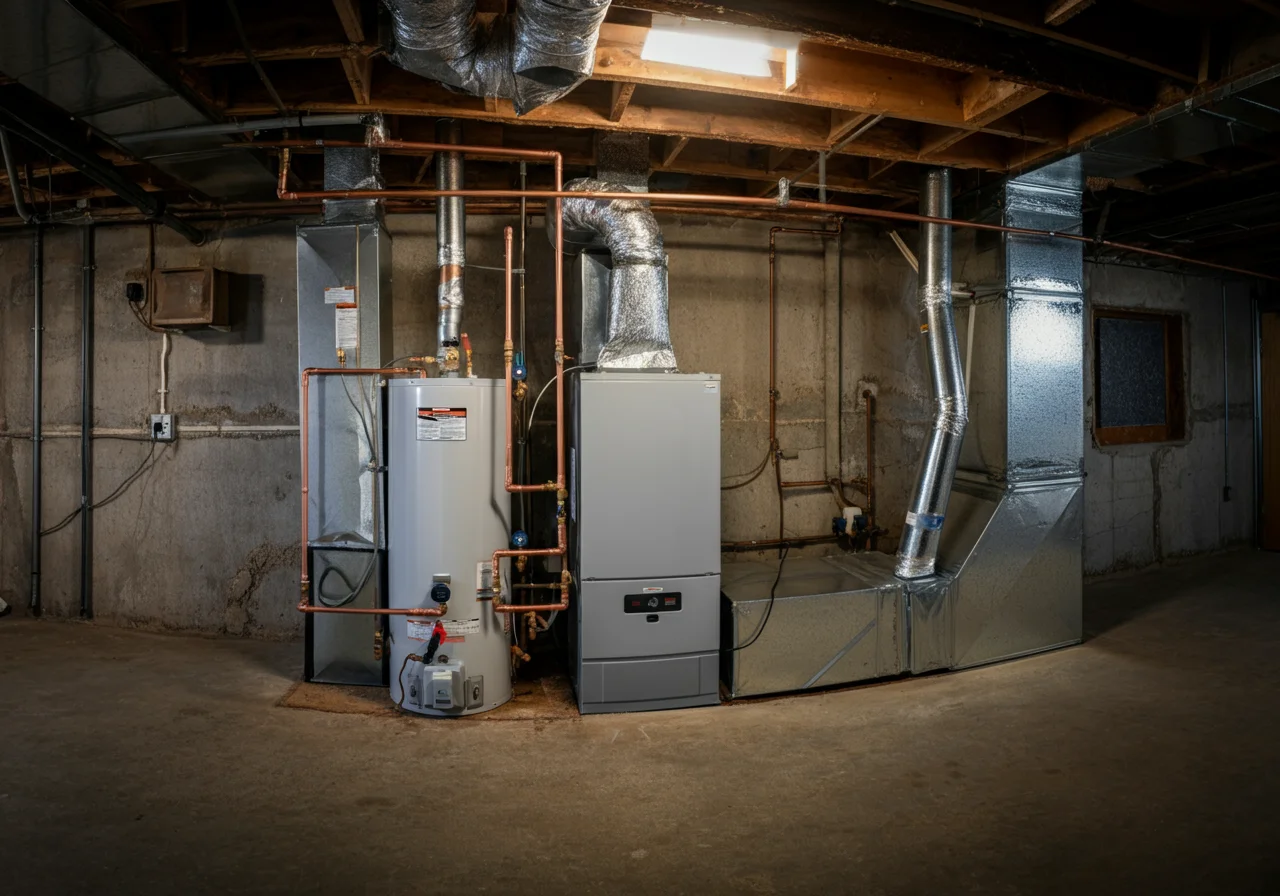
If the smoke test fails, you must systematically diagnose the cause. The problem is either with the vent system itself or the house pressure dynamics.
Common Causes and Corrections
- Blocked or Deteriorated Vent: Bird nests, rust flakes, or collapsed liner. Remove blockage. A corroded flue must be replaced. IPC 503.6 requires vents to be listed and installed per manufacturer’s instructions.
- Insufficient Vent Height/Rise: Natural draft relies on thermal buoyancy. The vent must have a minimum vertical rise (typically 5 ft.) before any offset, per manufacturer specs. An undersized or excessively long horizontal run will kill draft.
- Negative House Pressure: This is the most common culprit in modern, tight homes. Competing appliances (kitchen hood, dryer, central vacuum) and leaky return ducts on HVAC systems can depressurize the mechanical room.
- Solution 1: Provide dedicated combustion air. Per IFGC 304, this may involve installing louvers or ducting outside air directly to the appliance location.
- Solution 2: Install a power venter or draft inducer (e.g., Tjernlund products) to mechanically assure positive exhaust flow, converting the appliance to a “power-vented” configuration.
- Multiple Appliances on a Common Vent: Improper sizing or configuration can cause one appliance to backdraft another. Follow IFGC Chapter 5 for common venting tables and requirements.
Safety Warning: Non-Negotiable Protocol
Before any inspection or test: 1) Shut off the gas supply to the water heater at the dedicated shutoff valve. 2) Turn off the electrical supply at the circuit breaker. For electric units, shut off power and verify with a non-contact voltage tester. Never bypass safety devices or alter the vent without understanding the complete system. If you are not a licensed professional, stop at diagnosis and call one. Carbon monoxide poisoning is fatal.
External Reference for Technical Standards
For a foundational understanding of venting principles and terms, the Wikipedia entry on Flue Gas provides a clear technical overview of composition and behavior, which is critical for diagnosing flow issues. Always cross-reference with current, adopted local codes which supersede general information.