Heater Knocking Noise
Diagnosing a Heater Knocking Noise
A persistent heater knocking noise is a mechanical symptom indicating a fault within the water heating system. For professionals and advanced DIYers, this sound is not merely an annoyance but a diagnostic clue pointing to two primary culprits: sediment buildup within the tank or a water hammer event in the piping. Correctly identifying the source is critical, as the repair procedures for sediment and hydraulic shock are fundamentally different. Ignoring these noises can lead to reduced efficiency, component failure, or in severe cases, tank rupture.
Technical Deep Dive: Systematic Diagnosis and Repair
Follow this structured approach to isolate and resolve the knocking sound. Begin with the most common cause: sediment.
1. Investigating and Resolving Sediment Buildup
In areas with hard water, minerals (calcium carbonate, lime) precipitate out of the heated water and settle at the bottom of the tank. This layer insulates the heating elements or burner from the water, causing overheating of the steel tank bottom. The trapped water beneath the sediment superheats, forms steam bubbles, and collapses violently against the tank walls and heating elements, creating a loud knocking, popping, or rumbling sound.
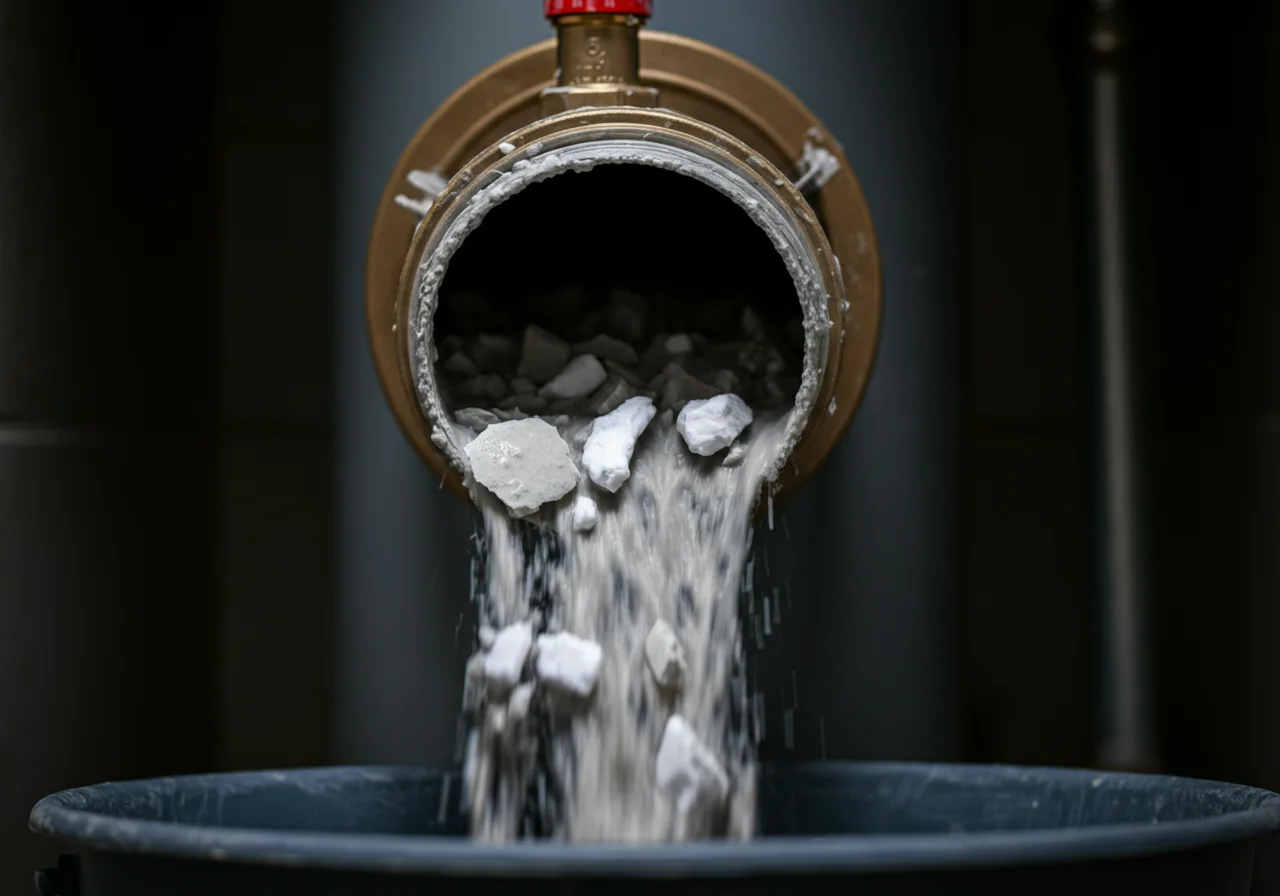
- Step 1: Confirm Sediment. Attach a hose to the tank’s drain valve and run it to a floor drain or bucket. Open the valve briefly. If the initial water flow is gritty, cloudy, or contains small rock-like particles, significant sediment is present.
- Step 2: Perform a Full Flush. With power/gas OFF and water supply ON, open a hot water faucet in the house to prevent a vacuum. Fully open the tank drain valve and allow water to flow until it runs completely clear. This may take 5-10 gallons. For severe buildup, you may need to alternately open and close the cold water supply valve to agitate the sediment bed.
- Step 3: Address Hardened Sediment. If flushing is ineffective, the sediment may be hardened. Do not use standard household vinegar for a full tank; its low acidity is ineffective. For professional descaling, use a certified, diluted commercial descaling solution (like lime-specific products from Ridgid or equivalent). Follow the manufacturer’s instructions precisely: you will typically isolate the tank, fill it partially with the solution, allow for extended dwell time, and then thoroughly flush. This is an advanced procedure.
- Step 4: Prevent Recurrence. Install a whole-house water softener if hardness is severe. For less severe cases, consider periodic (annual) flushing as part of a maintenance schedule.
2. Diagnosing and Arresting Water Hammer
Water hammer is a hydraulic shock wave caused by the sudden stop or change in direction of water flow, such as when a solenoid valve in a washing machine or dishwasher closes rapidly. The momentum of the water column creates a high-pressure spike that slams into pipe fittings and the water heater tank, producing a single, loud bang or knock. This is distinct from the continuous rumbling of sediment.
- Step 1: Isolate the Event. Correlate the knock with the exact moment an appliance valve closes. The sound will be instantaneous and sharp.
- Step 2: Check for Missing Air Chambers. Air chambers (short vertical pipes near fixtures) act as cushions. Over time, they become waterlogged. To recharge, shut off the main water supply and open the highest and lowest faucets in the house to drain the system completely. Then close the faucets and restore water supply.
- Step 3: Install a Water Hammer Arrestor. For a permanent, mechanical solution, install a code-compliant water hammer arrestor on the supply lines to offending appliances (e.g., washing machine, dishwasher). These sealed devices contain a piston and air cushion that absorbs the shock wave. Brands like Milwaukee offer tooling for easy installation.
Code & Compliance
Adherence to plumbing codes ensures system integrity and safety.
- IPC (International Plumbing Code) P2903.5 & UPC (Uniform Plumbing Code) 609.4: Both codes require that piping be secured against movement and that water hammer arrestors be installed where quick-closing valves are utilized to prevent hydraulic shock.
- OSHA General Duty Clause: Requires the workplace to be free from recognized hazards. A water heater failing from unaddressed sediment overheating or repeated water hammer stress could constitute such a hazard.
- NEC (NFPA 70) Article 422: Governs the installation and disconnection requirements for appliances like water heaters, emphasizing the need for proper electrical isolation during service.
Toolbox
Using professional-grade tools ensures accurate diagnosis and safe repair.
| Tool | Purpose | Example Brands |
|---|---|---|
| Standard Hose & Bucket | For safe sediment flushing and drainage. | Generic heavy-duty hose |
| Pipe Wrenches (2) | For installing arrestors or servicing valves. | Ridgid |
| Multimeter | To verify power is OFF at the unit before service. | Fluke |
| Descaling Solution Pump Kit | For circulating commercial descaling agent in severe cases. | Ridgid or equivalent professional brand |
External Reference
For a definitive technical explanation of the water hammer phenomenon and its physics, consult the resource from the U.S. Nuclear Regulatory Commission. While focused on industrial systems, the fundamental principles are identical to residential plumbing.
NRC: Water Hammer Educational Resource
Final Professional Note: A heater knocking noise is a command for inspection. Sediment degradation is a slow, efficiency-killing process, while water hammer is an acute, high-pressure assault on your piping system. Methodical diagnosis—listening to the sound’s character, checking drained water, and observing appliance cycles—will direct you to the correct, code-compliant solution. Permanent fixes, whether through scheduled maintenance or mechanical arrestors, protect your investment and ensure system longevity.