The Diagnosis: Selecting the Best Basin Wrench for Confined Faucet Installations
When a standard wrench or pliers can’t reach the mounting nuts hidden deep behind a sink basin, a specialized basin wrench is the only correct tool for the job. Selecting the best basin wrench is critical for efficient faucet replacement, toilet installation, and other plumbing work in tight spaces. This guide provides a technical deep dive into features, application, and compliance to ensure you have the right tool to tackle those impossible nuts.
Technical Deep Dive: Anatomy and Operation of a Superior Basin Wrench
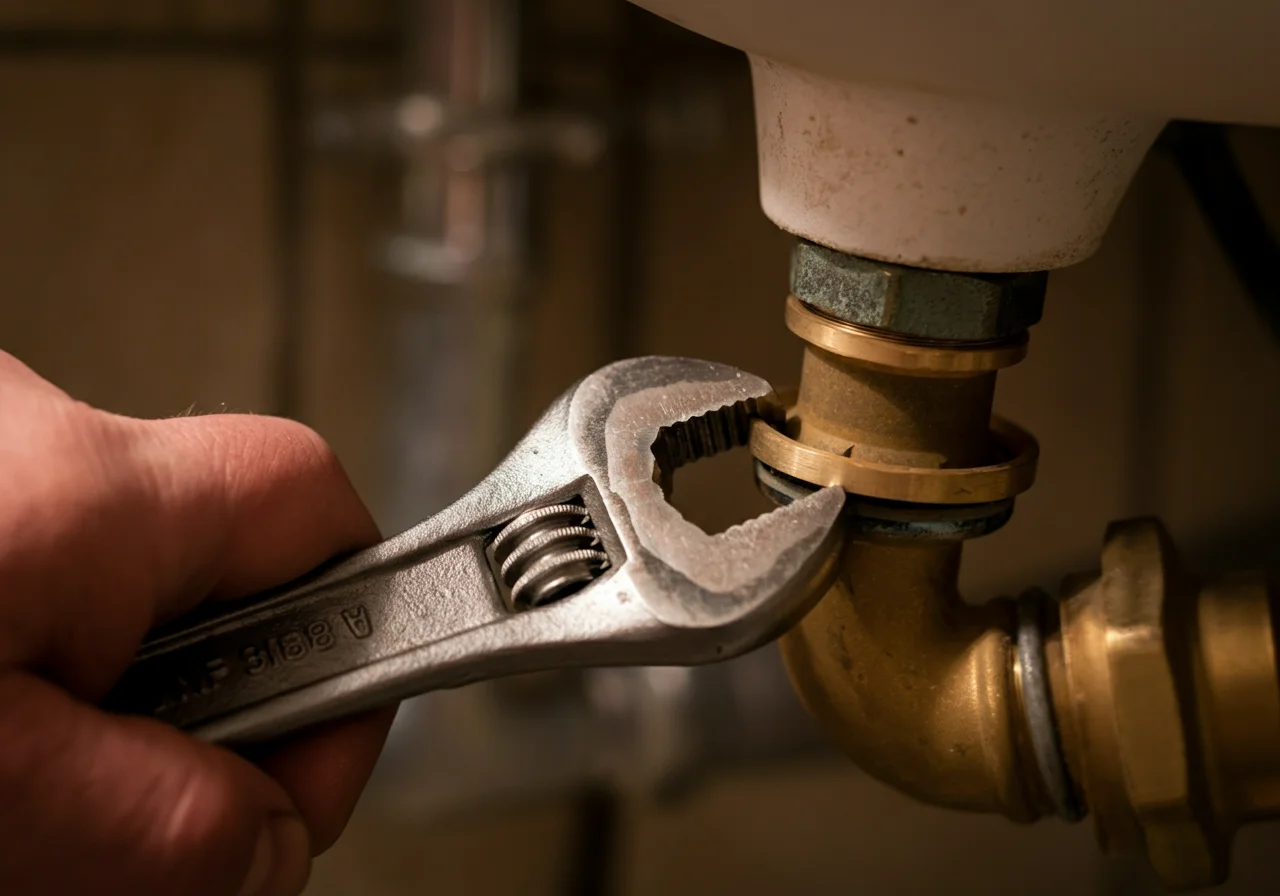
A quality basin wrench is defined by its ability to grip, turn, and hold a fastener in a nearly inaccessible location. Here is the step-by-step breakdown of its function and key features to evaluate.
- Jaw Mechanism: The business end features a spring-loaded, self-tightening jaw that pivots to grip standard hex nuts (typically 1/2″ or 9/16″). The best jaws are hardened steel and have sharp, clean teeth to prevent cam-out and rounding of the nut.
- Telescoping Shaft: A telescoping shaft is non-negotiable for modern work. It allows you to adjust the tool’s length, often from about 15″ to over 24″, to navigate deep cabinet sinks or reach over obstructions. The locking mechanism must be positive and rattle-free.
- Drive and Handle: The top of the shaft has a T-handle or a reversible ratchet head. A reversible ratchet allows for continuous tightening or loosening without repositioning the tool—a massive efficiency gain during faucet install.
- Operation Sequence:
- Extend the telescoping shaft to the required length and lock it.
- Feed the wrench up behind the sink, guiding the jaw onto the faucet’s mounting nut.
- Apply slight upward pressure to engage the self-tightening jaw.
- Turn the handle to loosen (counter-clockwise). The ratchet mechanism allows for small, effective arcs.
- Reverse the ratchet to tighten the new nut, ensuring it is snug but not over-torqued.
Code & Compliance: Ensuring a Secure Installation
While a basin wrench is a tool, its proper use directly impacts code-compliant fixture installation. The International Plumbing Code (IPC) and Uniform Plumbing Code (UPC) govern fixture securement.
- IPC Section 405.5 & UPC Section 408.3: These sections require that plumbing fixtures be securely fastened to structural members or the supporting wall or floor. A loose faucet due to an improperly tightened nut can lead to movement, stress on supply lines, and eventual leaks.
- Torque Matters: Manufacturer instructions supersede code. Most faucet mounting nuts require only hand-tight plus a quarter to half-turn with a tool. Over-tightening with a basin wrench can crack the sink’s mounting deck or strip the threads, creating a violation of the fixture’s listed installation requirements.
Toolbox: Features of Top-Tier Models
Investing in a professional-grade tool saves time and prevents damage. Look for these features, exemplified by brands like Ridgid (for robust mechanical design) and Milwaukee (for innovation and durability).
| Feature | Professional Grade | Consumer Grade | Why It Matters |
|---|---|---|---|
| Jaw Construction | Forged, hardened steel with machined teeth | Cast metal with stamped teeth | Prevents slipping and rounding of soft brass nuts. |
| Telescoping Tube | Thick-walled, chrome-plated with a positive thumb-lock | Thin-walled, painted steel with friction collar | Eliminates flex under torque and maintains setting. |
| Ratcheting Head | 72-tooth or higher, sealed against debris | Coarse 24-tooth or non-ratcheting T-bar | Allows work in arcs as small as 5 degrees in cramped spaces. |
| Weight & Balance | Heavier head for downward jaw engagement | Top-heavy or poorly balanced | Uses gravity to help seat the jaw on the nut. |
Safety and Operational Warning
WARNING: Before beginning any work, you MUST shut off the water supply valves under the sink. For main faucet replacements, also shut off the main water supply to the house and relieve pressure by opening a lower faucet. Always verify power is off to any garbage disposals or instant hot water dispensers before reaching into the cabinet. Wear safety glasses to protect from falling debris and particulate.
External Reference for Technical Standards
For a definitive engineering overview of wrench types, designs, and mechanics, the Wikipedia entry on Wrenches provides a solid technical foundation. While not a procedural guide, it details the principles of leverage and jaw design that make a basin wrench effective.
Final Specification Checklist for Your Purchase
When procuring your best basin wrench, use this checklist to ensure it meets professional demands:
- Reversible ratcheting mechanism with fine tooth count (>60).
- Sturdy telescoping shaft that extends to at least 24″.
- Hardened, pivoting jaw that opens to at least 9/16″.
- Comfortable, non-slip grip on the handle.
- Manufacturer’s lifetime warranty (indicator of quality).
A superior basin wrench is not a tool you use every day, but when you need it, nothing else will do. By selecting a model with a robust telescoping shaft, a precise ratcheting head, and a durable jaw, you transform a frustrating, time-consuming faucet install into a straightforward, code-compliant procedure. Invest in the right tool once to save labor and ensure a leak-free, secure installation on every job.