Hot Water Temp Limits
The Diagnosis: Understanding Mandatory Hot Water Temperature Limits
Regulating hot water temperature is a critical safety and code compliance issue, not a matter of preference. For plumbing professionals, understanding and implementing temperature limiting protocols is essential to prevent severe scald injuries, particularly in vulnerable populations like children and the elderly, and to meet stringent building code requirements. This guide details the technical specifications for public hand-washing and bathtub applications, focusing on scald prevention through the correct application of thermostatic mixing valves (TMVs).
Technical Deep Dive: Implementing Code-Compliant Temperature Control
Compliance is achieved through a systematic approach involving correct fixture identification, valve selection, and precise installation.
- Step 1: Identify Fixture Type and Code Mandate
First, determine the fixture’s use case. For public hand-washing facilities (e.g., in restaurants, schools, office bathrooms), the maximum allowable hot water temperature at the fixture is typically 110°F (43°C). For bathtubs and shower valves, especially in healthcare, childcare, and senior living facilities, the maximum outlet temperature must not exceed 120°F (49°C). Always verify with local amendments. - Step 2: Select and Install the Correct Thermostatic Mixing Valve (TMV)
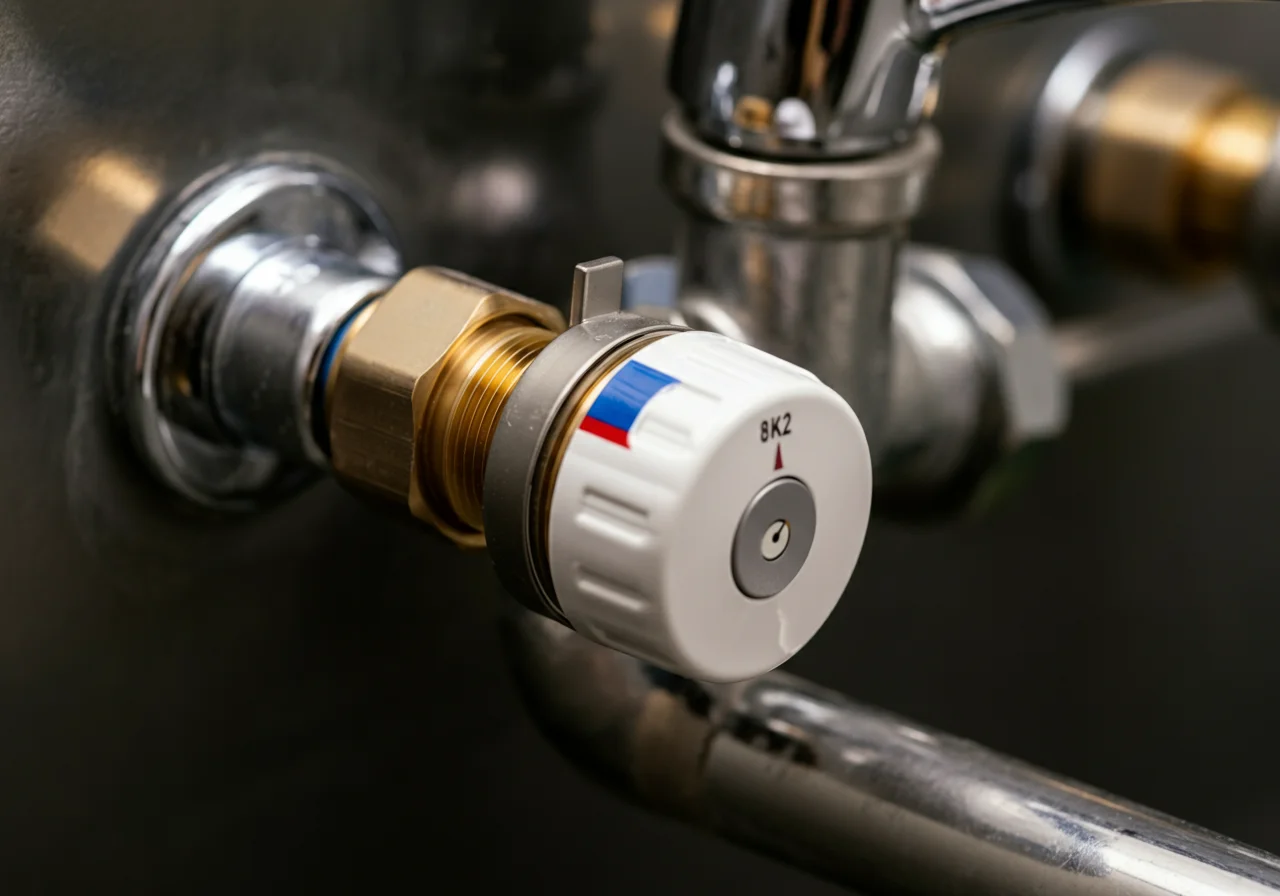
A TMV is not a simple pressure-balancing valve. It uses a thermal element to automatically blend hot and cold water to a pre-set safe temperature, compensating for pressure fluctuations. Install the TMV as close as is practical to the fixture or branch it serves.- Use a calibrated thermometer to set the outlet temperature.
- Ensure the valve has adequate access for future service and testing.
- Install isolation valves on the hot, cold, and mixed water outlets of the TMV.
- Step 3: System Verification and Testing
After installation, conduct a performance test.- With the fixture running at the set temperature, simulate a cold-water pressure drop by partially closing the cold isolation valve. The TMV should rapidly reduce hot water flow to maintain a safe mixed temperature, typically shutting off hot water entirely if cold supply fails.
- Record the set temperature and test results for inspection documentation.
Code & Compliance: The Regulatory Framework
Adherence to model codes is non-negotiable and forms the basis of professional practice and liability protection.
- International Plumbing Code (IPC) & Uniform Plumbing Code (UPC): Both model codes mandate temperature limiting for specific fixtures. The IPC, for example, in Section 424.3, requires that in public hand-washing facilities, the hot water temperature be limited to a maximum of 110°F. The UPC has similar provisions in its fixture fitting requirements.
- ASSE Standards: The performance and design of the valves themselves are governed by ANSI/ASSE standards. Key standards include:
- ASSE 1017: For thermostatic mixing valves used on individual showers and tub/shower combinations.
- ASSE 1070: For thermostatic mixing valves used on commercial applications and for point-of-use or branch supply lines.
Specifying valves that are certified to the correct ASSE standard is a fundamental requirement.
- OSHA & ADA Considerations: In commercial settings, OSHA’s General Duty Clause can be invoked if scalding hazards are present. Furthermore, the Americans with Disabilities Act (ADA) guidelines often reference safe water temperatures as part of accessible design.
Scald Prevention: The Critical Data
Understanding the injury timeline underscores the necessity of precise temperature limiting.
| Water Temperature | Time for a 3rd Degree Burn (Adult Skin) | Risk Level & Context |
|---|---|---|
| 150°F (66°C) | Approx. 2 seconds | Extreme Hazard. Typical water heater factory setting. |
| 140°F (60°C) | Approx. 5 seconds | High Hazard. Common in residential tanks without control. |
| 130°F (54°C) | Approx. 30 seconds | Serious Hazard. Exceeds safe limits for bathing. |
| 120°F (49°C) | Approx. 10 minutes | Code Maximum for bathing. Provides critical reaction time. |
| 110°F (43°C) | > 6 hours | Safe for public hand-washing. Virtually eliminates scald risk. |
Toolbox: Essential Equipment for Installation & Verification
- Temperature Measurement: A high-accuracy, fast-response digital thermometer with a probe is mandatory for setting and testing TMVs. Brands like Fluke offer reliable industrial-grade thermometers.
- Installation Tools: Proper tube cutters and deburring tools (e.g., Ridgid) are required for clean, leak-free connections to the valve. A quality multimeter may be needed for testing electrically-assisted or controlled TMVs.
- Valve Selection: Always specify commercial-grade TMVs from reputable manufacturers (e.g., Leonard, Watts, Taco) that carry the appropriate ASSE 1017 or 1070 certification for the application.
Safety Warning
Before performing any work on a water heating or distribution system, shut off the electrical breaker to the water heater and close the main water supply valve. Relieve system pressure by opening fixtures downstream. Verify the water heater and pipes are cool enough to handle. Failure to do so can result in severe burns, electrocution, or flood damage.
External References
For a definitive scientific overview of scald burn data and prevention research, consult the technical information published by the U.S. Consumer Product Safety Commission (CPSC) on Tap Water Scald Burns. This .gov resource provides the foundational injury data that informs modern plumbing codes.