Indirect Waste Receptor
The Diagnosis: What is an Indirect Waste Receptor?
An Indirect Waste Receptor is a plumbing fixture or device that receives the discharge from equipment containing potential contaminants—such as food waste, chemicals, or biological hazards—through a physical air gap. This critical separation prevents contaminated water from siphoning back into the potable water supply or the equipment itself. For professionals installing or servicing commercial kitchens, labs, or medical facilities, understanding the code-mandated use of indirect waste receptors for equipment like ice machines, commercial dishwashers, and food prep sinks is non-negotiable for system integrity and public health.
Technical Deep Dive: Installing and Sizing an Indirect Waste System
Correct installation hinges on creating a verifiable, code-compliant air gap and ensuring proper receptor capacity. Follow this procedural guide.
Step 1: Identify the Equipment and Waste Type
- Category 1: Food/Beverage Equipment. Ice machines, coffee brewers, soft-serve dispensers. Waste may contain organic matter.
- Category 2: Chemical or Biological Equipment. Laboratory sinks, autoclaves, dental chairs. Waste may contain hazardous contaminants.
- Category 3: Clear-Water Equipment. Water treatment unit drains, condensation drains. Primarily for backflow prevention.
The category dictates the required air gap distance and may influence receptor material (e.g., acid-resistant for labs).
Step 2: Establish the Code-Compliant Air Gap
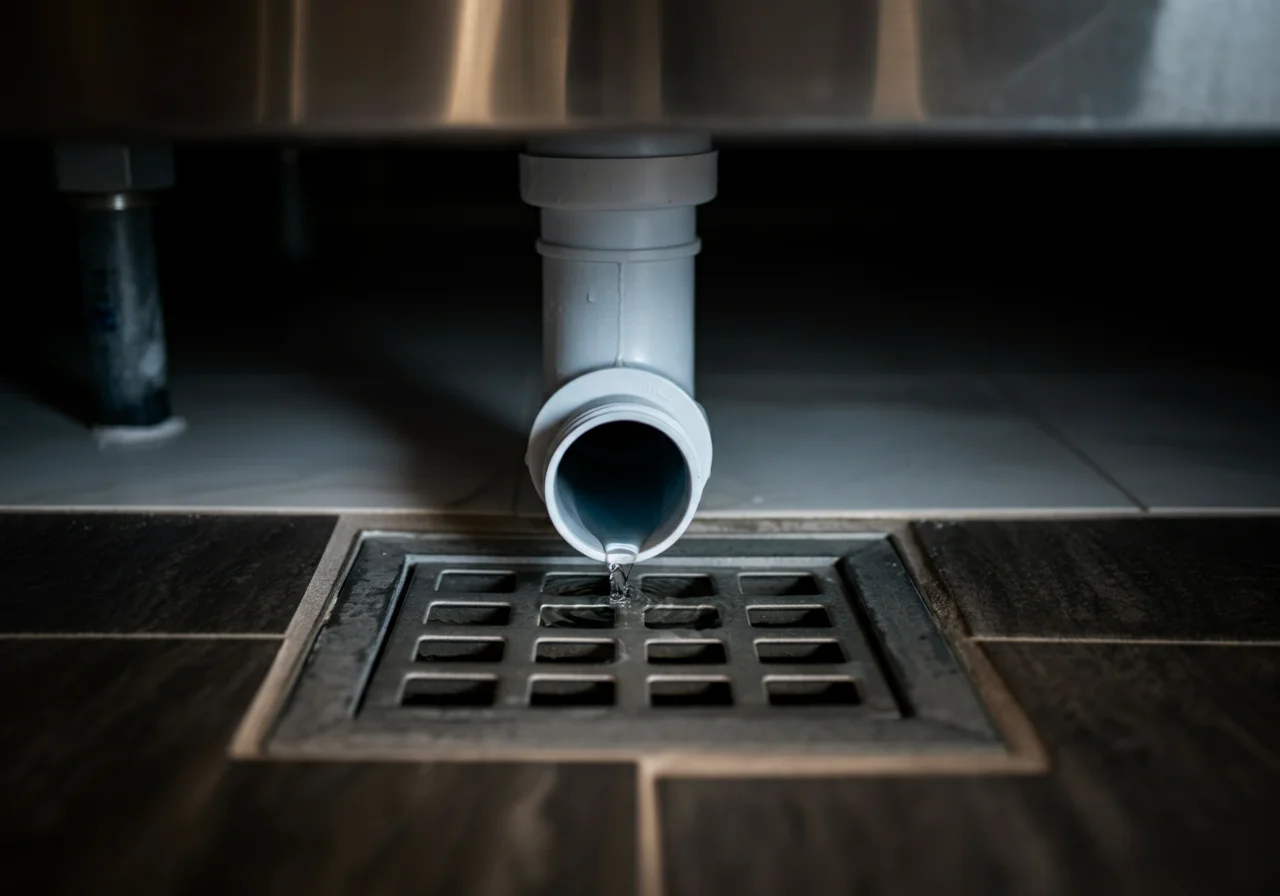
The air gap is the unobstructed vertical distance between the waste pipe’s outlet and the flood-level rim of the receptor. This is not a suggestion; it is a measurable requirement.
- Using a Ridgid or similar brand tape measure, verify the gap.
- The discharge pipe must terminate above the rim, pointing downward. No piping or fittings can be inserted into the receptor.
- For most applications, the air gap must be at least twice the effective diameter of the drain outlet, but not less than 1 inch (25 mm).
Step 3: Select and Size the Receptor
The receptor (commonly a floor sink, hub drain, or standpipe) must be sized to handle the maximum anticipated discharge rate without flooding.
| Equipment Example | Minimum Receptor Size / Drain Connection | Typical Air Gap Requirement |
|---|---|---|
| Under-counter ice machine | 2″ floor sink | 2 x drain outlet diameter (min. 1″) |
| Commercial glasswasher | 3″ floor sink | 2 x drain outlet diameter |
| Condensate drain (HVAC) | 1.5″ standpipe | 1.5″ minimum |
The receptor must be readily accessible for inspection and cleaning. It should be trapped and vented according to code.
Step 4: Final Connection and Inspection
- Secure the waste line from the equipment. Use appropriate Milwaukee M12 tools for precise cutting and fastening.
- Ensure the discharge points directly into the center of the receptor. Do not allow splash onto surrounding surfaces.
- Test the system: run the equipment and verify all flow is captured without backup or spillage.
⚠️ Safety Warning
Before performing any work near electrical components of waste-producing equipment (e.g., an ice machine), turn off and lock out the circuit breaker. When working on existing drainage, assume pipes contain waste; wear appropriate PPE (gloves, eye protection).
Code & Compliance: IPC, UPC, and Food Safety Mandates
Adherence to plumbing code is the legal and technical foundation for indirect waste systems.
International Plumbing Code (IPC) & Uniform Plumbing Code (UPC)
Both model codes are explicit. Key citations include:
- IPC Section 802.1.2 / UPC Section 802.1: Requires an air gap for indirect waste pipes. The UPC specifically states the air gap shall be at least twice the diameter of the drain outlet.
- IPC Section 802.2.1 / UPC Section 802.4: Lists fixtures and equipment that must discharge indirectly, including: “Domestic dishwashing machines, commercial food or beverage processing equipment, commercial dishwashing machines, commercial laundry washing machines, commercial steam cookers, and sterilizers.”
- IPC Section 802.1.3: Prohibits indirect waste pipes from discharging into toilets, urinals, or other plumbing fixtures that themselves discharge into the drainage system.
Food Safety Code Integration (FDA Food Code)
Plumbing code intersects with health regulations. The FDA Food Code, adopted by most states, mandates indirect drainage for specific equipment to prevent backflow contamination.
- Section 5-202.13: “A plumbing system shall be installed to preclude backflow of a solid, liquid, or gas contaminant into the water supply system at each point of use at the food establishment, including on a hose bibb if a hose is attached.”
- This is achieved physically via the air gap at the indirect waste receptor. Health inspectors will check for this gap on ice machines and food prep sinks.
Toolbox: Essential Gear for the Job
- Measuring & Layout: A Ridgid tape measure and level for verifying air gap and fall.
- Pipe Work: Milwaukee M18 Force Logic™ Press Tool for efficient, solder-free connections on drain lines, or a standard propane torch for soldering.
- Inspection: A high-quality borescope or inspection camera to verify internal pipe conditions and proper drainage flow.
External Reference for Technical Definitions
For a foundational engineering definition of the air gap principle central to this system, consult the Wikipedia entry on Air Gap (plumbing). This resource accurately describes the fundamental physics and purpose of the air gap as a backflow prevention method.
Conclusion: The Non-Negotiable Standard
Specifying and installing a correct indirect waste receptor system is a definitive mark of professional craftsmanship. It is a direct application of code knowledge—primarily IPC 802/UPC 802—to solve a critical public health problem: cross-connection control. In food service and healthcare environments, this is not merely a plumbing detail; it is a primary defense against contamination and liability. Always measure the air gap, size the receptor for the flow, and document the installation for inspection. There is no acceptable shortcut.