Jaw Maintenance Oil
The Diagnosis: Sticking Jaws and Incomplete Presses
A press tool’s reliability depends on the smooth, unimpeded movement of its jaw assembly. When jaw maintenance oil is neglected, or the wrong lubricant is used, carbon buildup, copper shavings, and general grime cause the jaws to stick or not close fully. This leads to incomplete crimps, which are catastrophic failures that can cause leaks under pressure. Proper press tool care is not optional; it’s a core maintenance procedure to protect your investment and ensure system integrity.
Technical Deep Dive: Cleaning and Lubrication Procedure
Follow this procedure before the first use of the day, after every 500 presses, or anytime you notice resistance. Always refer to your specific tool’s manual first.
Step 1: Safety and Preparation
- SAFETY WARNING: Ensure the tool is completely disconnected from its power source (battery removed or air line disconnected and depressurized).
- Wear safety glasses and gloves. The cleaning process can dislodge sharp metal particles.
- Gather materials: Clean, lint-free rags, a small brass brush (non-sparking), isopropyl alcohol (90%+), and the correct lubricant.
Step 2: Jaw Disassembly and Inspection
- Open the tool jaws fully and engage the safety latch if present.
- Remove the jaw assembly according to the manufacturer’s instructions. This often involves depressing a release lever or removing a retaining pin.
- Visually inspect the jaws for excessive wear, cracks, or deep scoring. Replace jaws if any damage is found.
- Inspect the jaw slots in the tool head for debris.
Step 3: Cleaning
- Use the dry brass brush to scrub away all loose debris, carbon, and metal shavings from the jaws and the tool’s jaw slots. Do not use steel brushes, which can damage surfaces.
- Dampen a rag with isopropyl alcohol and thoroughly wipe all jaw surfaces, pins, and the tool head interface. Alcohol is an effective solvent that evaporates quickly without leaving residue.
- Allow all components to air dry completely before lubrication.
Step 4: Lubrication (The Critical Step)
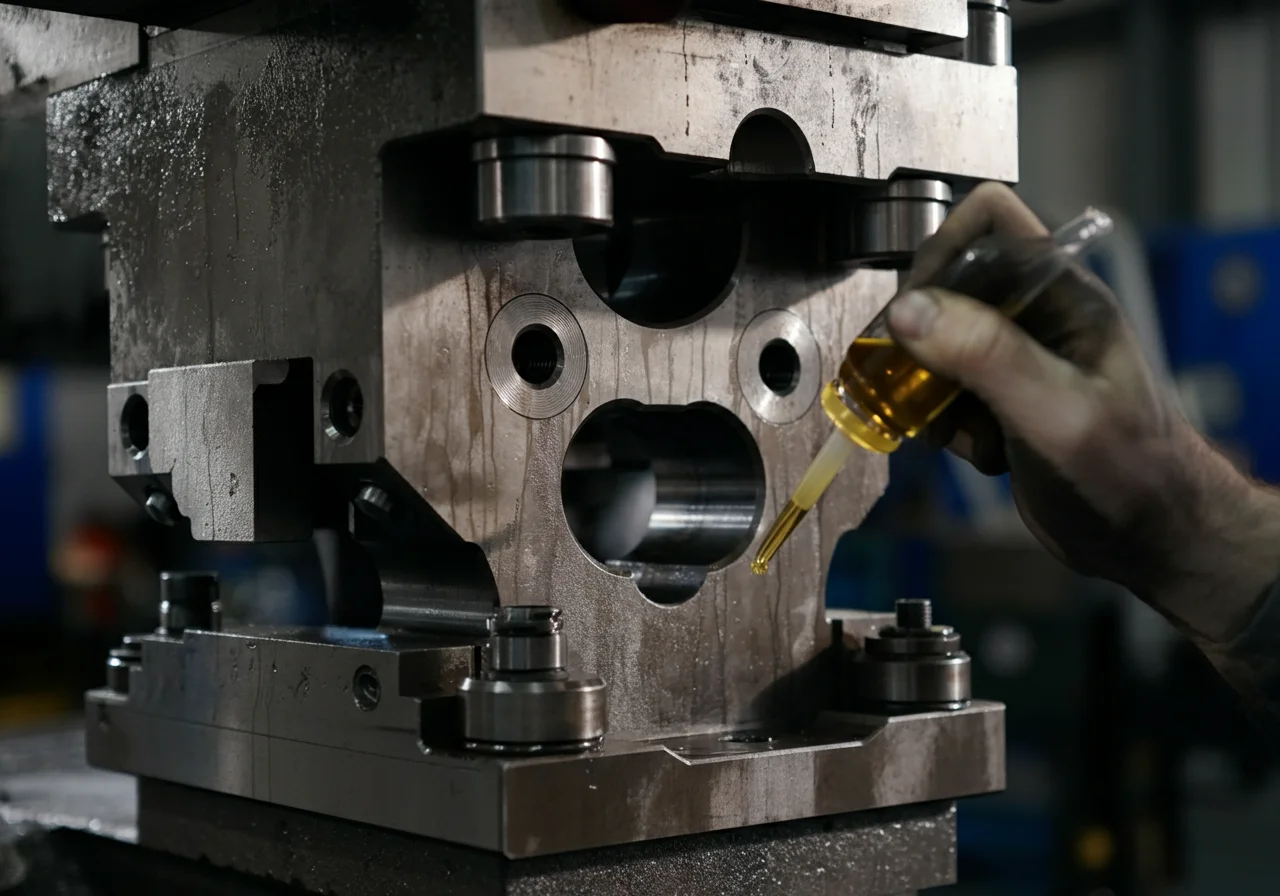
- Apply Lubricant Sparingly: This is the most common error. Over-lubrication attracts more debris.
- Apply a thin film of the specified lubricant to the sliding surfaces of the jaws and the pivot pins. Avoid getting lubricant on the gripping teeth or the crimping profile.
- Manually work the jaws open and closed several times to distribute the lubricant evenly.
- Wipe away any excess lubricant with a clean rag.
Step 5: Reassembly and Function Test
- Reinstall the jaw assembly, ensuring it clicks or locks securely into place.
- Without a fitting, perform several dry cycles to ensure smooth, full operation.
- Perform a test press on a scrap fitting and tubing. Inspect the completed crimp for a uniform, full-circle indentation.
Code & Compliance: The Stakes of a Failed Press
While tool maintenance itself isn’t directly codified, the consequences of poor maintenance violate fundamental plumbing codes. An incomplete crimp from sticking jaws creates a joint that is not “sound and tight” as required.
- IPC 305.6 & UPC 603.1: Joints and connections shall be gas-tight and water-tight. A leak from a failed press joint fails this basic requirement.
- OSHA General Duty Clause (Section 5(a)(1)): Requires employers to provide a workplace free from recognized hazards. Using improperly maintained tools that can cause sudden failure or injury is a recognized hazard.
- Manufacturer’s installation instructions are also considered code (IPC 102.8). Those instructions mandate using a properly maintained, calibrated tool.
Toolbox: Lubricant Selection and Quality Tools
Using the correct lubricant is non-negotiable. Never use general-purpose oils, WD-40, or grease.
| Lubricant Type | Primary Use | Key Property | Brand Example* |
|---|---|---|---|
| Manufacturer-Specific Jaw Oil | General jaw lubrication for most pro-press tools. | Formulated to resist carbon buildup and not degrade seals. | Ridgid Press Jaw Lubricant |
| Pure Synthetic Graphite Powder | High-heat or high-debris environments; where oil-based lubricants burn off or gum up. | Dry lubricant; stable across extreme temperatures, won’t attract dust. | Kano Graphite Aerosol |
| Synthetic Air Tool Oil | For pneumatic press tools’ internal mechanisms (not the jaws). | Prevents internal corrosion and maintains O-ring integrity. | Milwaukee Air Tool Oil |
*Mention of brands is for illustrative purposes of product type. Always use lubricant specified by your tool manufacturer.
Why Graphite is Specified
Graphite is a dry, solid lubricant composed of carbon layers that slide over each other. In press tool applications, it’s invaluable because it doesn’t liquefy or attract particulate matter like oils can. It’s ideal for tools used in very dirty environments or for applications involving soldering near the jaws, where oil would burn off and create more carbon residue.
External Reference
For the definitive standard on occupational safety related to hand and power tools, consult the OSHA regulations. This provides the legal framework for maintaining equipment in a safe working condition.
OSHA Standard 1926.300 – General Requirements (Hand and Power Tools)