Laundry Standpipe Height
The Diagnosis: Incorrect Standpipe Height Causes Drainage Failure
A laundry standpipe is the vertical section of pipe that receives the discharge hose from your washing machine. Its height is not arbitrary; it is a critical dimension governed by plumbing code to prevent two primary failures: siphoning the trap dry and inadequate drainage velocity. An incorrectly sized standpipe leads to sewer gas infiltration, slow draining, or overflowing suds.
Technical Deep Dive: Sizing and Installing the Standpipe
The standpipe system is an integrated assembly. Correct installation requires adherence to specific measurements for each component.
Step-by-Step Installation & Sizing
- Pipe Diameter: The standpipe must be a minimum of 2 inches in diameter (IPC 802.4.1, UPC 802.4). A 1.5-inch pipe is prohibited for new installations as it cannot handle the high-volume, surge discharge of a modern washing machine.
- Standpipe Height (The Critical Dimension): The vertical length from the trap weir to the top of the standpipe must be between 18 inches (minimum) and 42 inches (maximum) (IPC 802.4.1, UPC 802.4).
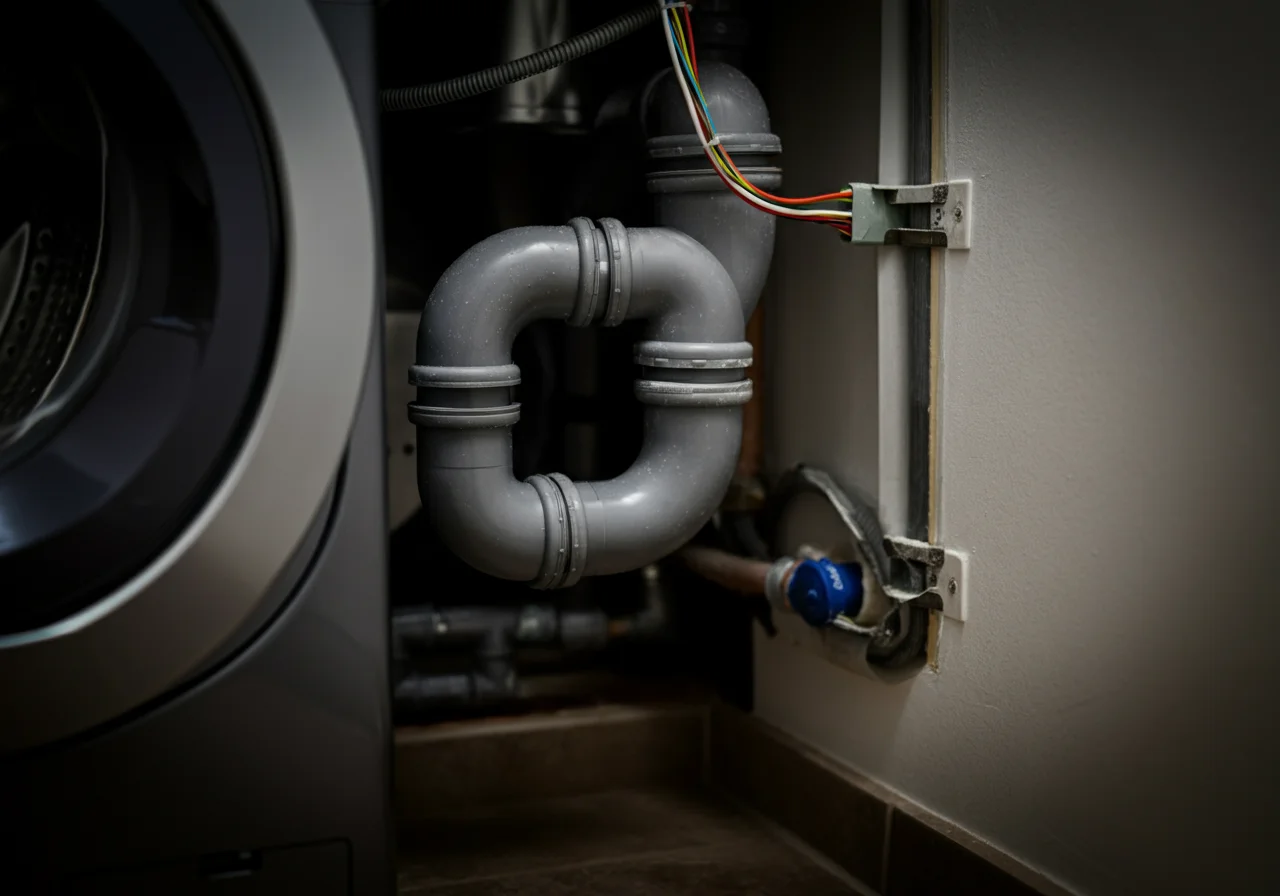
- Why a Minimum of 18″?: This prevents the washing machine discharge hose, which is typically inserted 6-8 inches into the standpipe, from resting below the trap weir. If the hose tip is below the weir, it can create a direct siphon path, evacuating the trap seal and allowing sewer gas into the home.
- Why a Maximum of 42″?: Excessive height creates too much friction loss. The pump from a standard residential washing machine is not designed to lift water over ~3.5 feet vertically while maintaining the necessary velocity to carry solids and suds down the drain. This results in pump strain, slow drainage, and leftover water in the drum.
- Optimal Practice: Most professionals aim for a standpipe height of 30-36 inches from trap weir to top. This provides a safe margin from both limits and ensures reliable performance.
- Trap Weir Location: The trap weir is the highest point of water inside the trap’s curved dip. The trap must be installed within 6 inches of the standpipe (measured from the center of the standpipe to the center of the trap inlet) (IPC 1002.3, UPC 1002.3). This proximity prevents the discharge from “blowing out” the trap seal due to excessive momentum.
- Ventilation: The trap must be vented. The vent connection must be within the trap arm distance, which for a 2-inch pipe is 5 feet maximum from the trap weir to the vent (IPC 906.1, UPC 906.2). This vent protects the trap seal from siphoning.
- Air Gap: The washing machine discharge hose should not be hard-plumbed. It must be loosely inserted into the standpipe, creating an air gap to prevent back-siphonage.
| Component | Code Reference (IPC / UPC) | Requirement | Rationale |
|---|---|---|---|
| Standpipe Height | IPC 802.4.1 / UPC 802.4 | 18″ min., 42″ max. (trap weir to top) | Prevents trap siphonage & pump overload. |
| Pipe Diameter | IPC 802.4.1 / UPC 802.4 | 2 inches minimum | Handles high-volume surge discharge. |
| Trap-to-Standpipe Distance | IPC 1002.3 / UPC 1002.3 | 6 inches maximum (center-to-center) | Prevents trap seal blowout. |
| Trap Arm Length (to vent) | IPC 906.1 / UPC 906.2 | 5 feet maximum for 2″ pipe | Protects trap seal from siphoning. |
Code & Compliance: The Legal Framework
Plumbing codes are the law for permitted work. The International Plumbing Code (IPC) and Uniform Plumbing Code (UPC) are the dominant models in the USA. Local amendments may exist; always check with your Authority Having Jurisdiction (AHJ). The specifications outlined above are direct citations from these codes, forming the non-negotiable basis for a compliant and functional laundry drain.
Safety & Performance Note: Code minimums are just that—the bare minimum. Designing to the optimal range (e.g., a 30-inch standpipe) provides a safety factor against installation tolerances and future appliance changes.
⚠️ Safety Warning
Before performing any work on existing drainage lines, verify the system is not in use and be aware of potential contamination. When cutting or soldering (sweating) copper pipe, shut off the water supply, drain the lines, and use appropriate personal protective equipment (PPE) including eye protection and gloves. Ensure the area is well-ventilated when using solvent cements or working with lead-free solder and flux.
Toolbox: Essential Tools for the Job
- Measuring & Layout: A 25-foot Milwaukee tape measure and a 4-foot level for establishing precise heights and slopes.
- Pipe Cutting & Preparation: A Ridgid tubing cutter for clean cuts on copper, CPVC, or ABS/PVC pipe. A deburring tool and appropriate primer/cement for plastic joints are mandatory.
- Testing: A test ball or plug to perform a mandatory water test on the completed DWV (Drain-Waste-Vent) system to check for leaks.
External Reference for Technical Definitions
For a foundational understanding of the plumbing trap and the hydraulic principle of the trap weir, which is central to this installation, consult the technical definition from a reputable source.
Wikipedia: Trap (Plumbing) provides a clear explanation of the seal, weir, and function.
Troubleshooting Common Laundry Standpipe Issues
- Problem: Sewer Smell Near Washer.
- Likely Cause: Dry trap due to siphoning. Check that the discharge hose is not jammed too far into a short standpipe (below the weir). Verify the trap is properly vented within the allowed distance.
- Solution: Ensure standpipe height is at least 18″. Pour water into the standpipe to refill the trap seal and investigate venting.
- Problem: Washer Drains Slowly or Overflows Standpipe.
- Likely Cause 1: Standpipe is too tall (over 42″), overwhelming the pump.
- Likely Cause 2: A clog in the P-trap or downstream line. The 2-inch line can accumulate lint and sediment.
- Solution: Measure and correct height if necessary. Use a drain auger (at least 3/4″ diameter) to clear the line. Install a lint trap on the discharge hose as preventative maintenance.
- Problem: Gurgling Sounds from Standpipe or Other Fixtures.
- Likely Cause: Inadequate venting. The rapid discharge from the washer is creating negative pressure in the drain line, pulling air through other trap seals.
- Solution: A licensed plumber must evaluate the vent system for proper sizing, blockages (e.g., bird nests in roof vent), or the need for an auxiliary air admittance valve (AAV) where local code permits.
Final Professional Recommendation
For a reliable, code-compliant laundry standpipe installation, target a system with these specs: a 2-inch diameter standpipe, 30 to 36 inches in height from the trap weir, a P-trap installed directly beneath the standpipe, and a properly sized vent connection within 5 feet. This configuration respects the hydraulic limitations of the appliance pump, protects the all-important trap seal, and will handle the surge flow of any residential washing machine without issue. Always perform a final water test on the system to confirm integrity before putting it into service.