Rheem Reset Button Trips
The Diagnosis: Understanding the Rheem Reset Button Trip
A tripping Rheem reset button—formally the ECO (Energy Cut Off) or high-limit safety switch—is a critical diagnostic signal from your electric water heater. It indicates the system has detected a dangerous condition, typically excessive temperature or pressure, and has shut down to prevent a catastrophic failure. Simply resetting it without diagnosis is a safety hazard. The primary culprits are often a failed electric heater element or a malfunctioning upper thermostat.
Safety Warning
Before any diagnostic work: Turn off the dedicated 240-volt circuit breaker for the water heater at the main service panel and verify power is off using a non-contact voltage tester. For tank-style units, shut off the cold water supply. Working on a live 240V system can cause severe injury or death.
Technical Deep Dive: Step-by-Step Diagnosis & Repair
Follow this systematic procedure to isolate the fault. Do not skip steps.
Step 1: Initial Safety Reset & Observation
- With power OFF, locate the red ECO reset button on the upper thermostat behind the access panel.
- Press the button firmly. If it does not stay engaged, the fault is still present. Proceed to diagnosis.
- If it resets, restore power and observe. An immediate or rapid re-trip points to a persistent fault.
Step 2: Testing the Upper Thermostat
A faulty thermostat failing to cycle off the lower element is the most common cause of ECO trips.
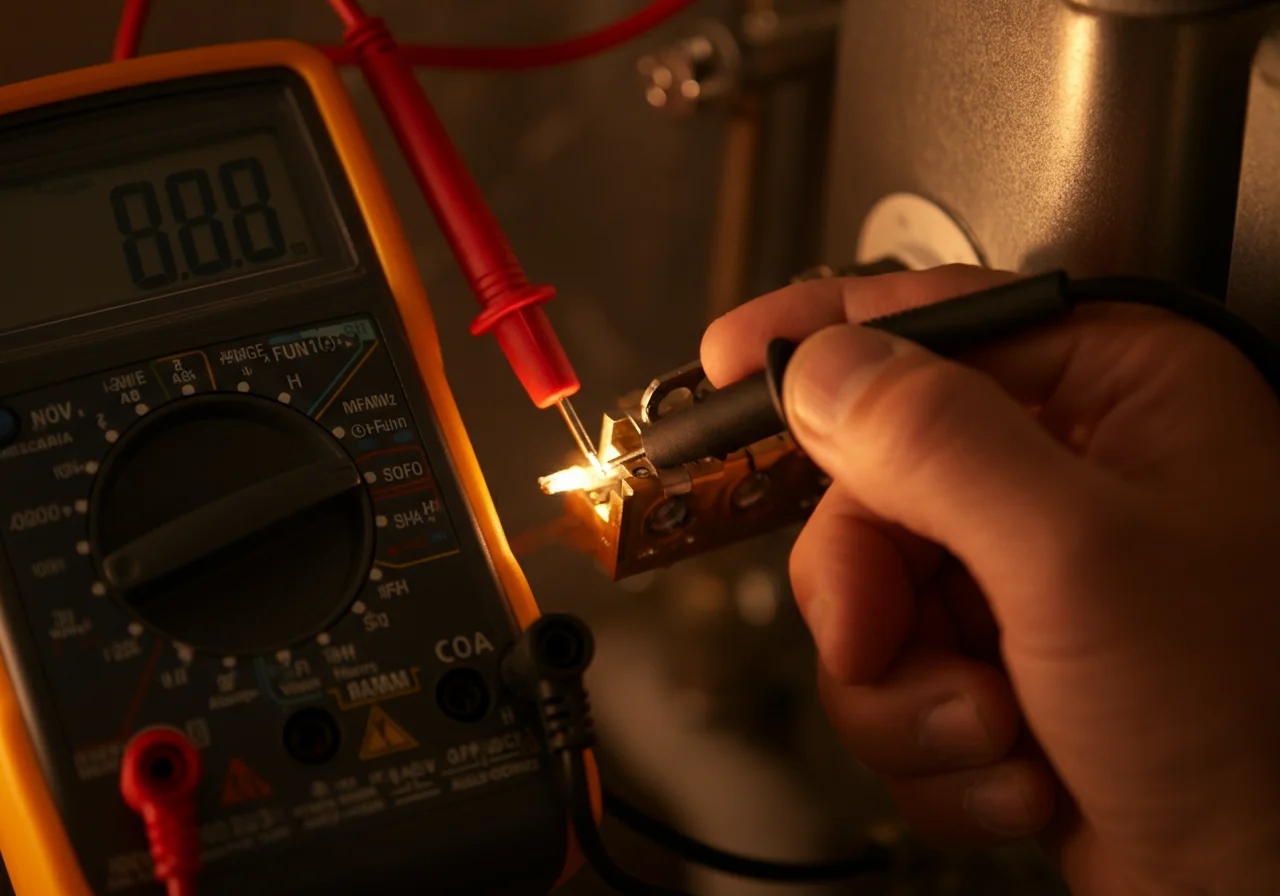
- Tool: Multimeter set to Ohms (Ω) or Volts (V~). A quality tool like a Fluke multimeter ensures accurate readings.
- Disconnect wires from the thermostat terminals, labeling them for reconnection.
- Set the thermostat to its highest setting.
- Test for continuity:
- Place one probe on the terminal that receives power (line-in). Place the other on the terminal feeding the lower element (load-out).
- A reading of near 0Ω indicates the thermostat is closed (calling for heat). A reading of OL (Open Line) indicates it is open and may be faulty.
- Now, set the thermostat to its lowest setting. You should now read OL (open). If you still read continuity, the thermostat is stuck closed and must be replaced.
Step 3: Testing the Electric Heater Elements
A grounded or burnt-out element can cause continuous heating or a direct short, tripping the ECO.
- Tool: Multimeter set to Ohms (Ω).
- Disconnect all wires from the element terminals.
- Test for Resistance: Place one probe on each of the element’s two screw terminals. A functioning 4500-watt, 240-volt element should show a resistance of approximately 10-16 ohms. A reading of OL indicates a blown (open) element.
- Test for Ground Fault: Set multimeter to highest Ohms setting. Place one probe on an element terminal and the other on the bare metal of the tank or the element’s mounting flange. The reading must be OL (infinity). Any other reading indicates the element is grounded and must be replaced.
- Inspect elements for visible blistering, cracking, or heavy scale buildup.
Step 4: System Verification & Final Steps
- If a faulty thermostat or element is found, replace it with an OEM-spec part. Use a proper Ridgid or similar element wrench to avoid stripping.
- Before restoring power, refill the tank completely and purge air from the lines by opening hot water faucets.
- Restore power and monitor. The reset button should remain engaged, and the heater should cycle normally.
Code & Compliance
All work must align with national safety codes to ensure system integrity and homeowner safety.
- National Electrical Code (NEC) Article 422: Governs the installation and branch-circuit requirements for fixed electric water heaters. Requires a dedicated circuit and proper overcurrent protection.
- Underwriters Laboratories (UL) Standard 174: Dictates the safety design of the appliance itself, including the ECO’s trip temperature threshold, which is typically 190°F.
- OSHA 29 CFR 1910.303: Standards for electrical safety during maintenance, including verification of de-energized circuits (Lockout/Tagout procedures).
Replacing a safety component like the ECO or thermostat with a non-listed part violates these codes and voids the unit’s listing.
Toolbox
Using professional-grade tools ensures accurate diagnosis and safe repair.
| Tool | Purpose | Example Brand |
|---|---|---|
| Digital Multimeter | Continuity, resistance, and voltage checks on thermostats and elements. | Fluke |
| Non-Contact Voltage Tester | Verifying circuit is de-energized before work. | Klein Tools |
| Element Wrench | Removing and installing heater elements without damage. | Ridgid |
| Screwdriver Set | Removing access panels and terminal screws. | Milwaukee |
External Reference
For definitive technical specifications and safety information, always consult the manufacturer’s documentation. Rheem provides comprehensive manuals for their products.
Rheem Electric Water Heater Use & Care Manual (Example) – This PDF covers safety, operation, and basic troubleshooting for residential electric models.