Soil Pipe Cutter Rigid
The Diagnosis: Cutting Cast Iron Soil Pipe in a Trench
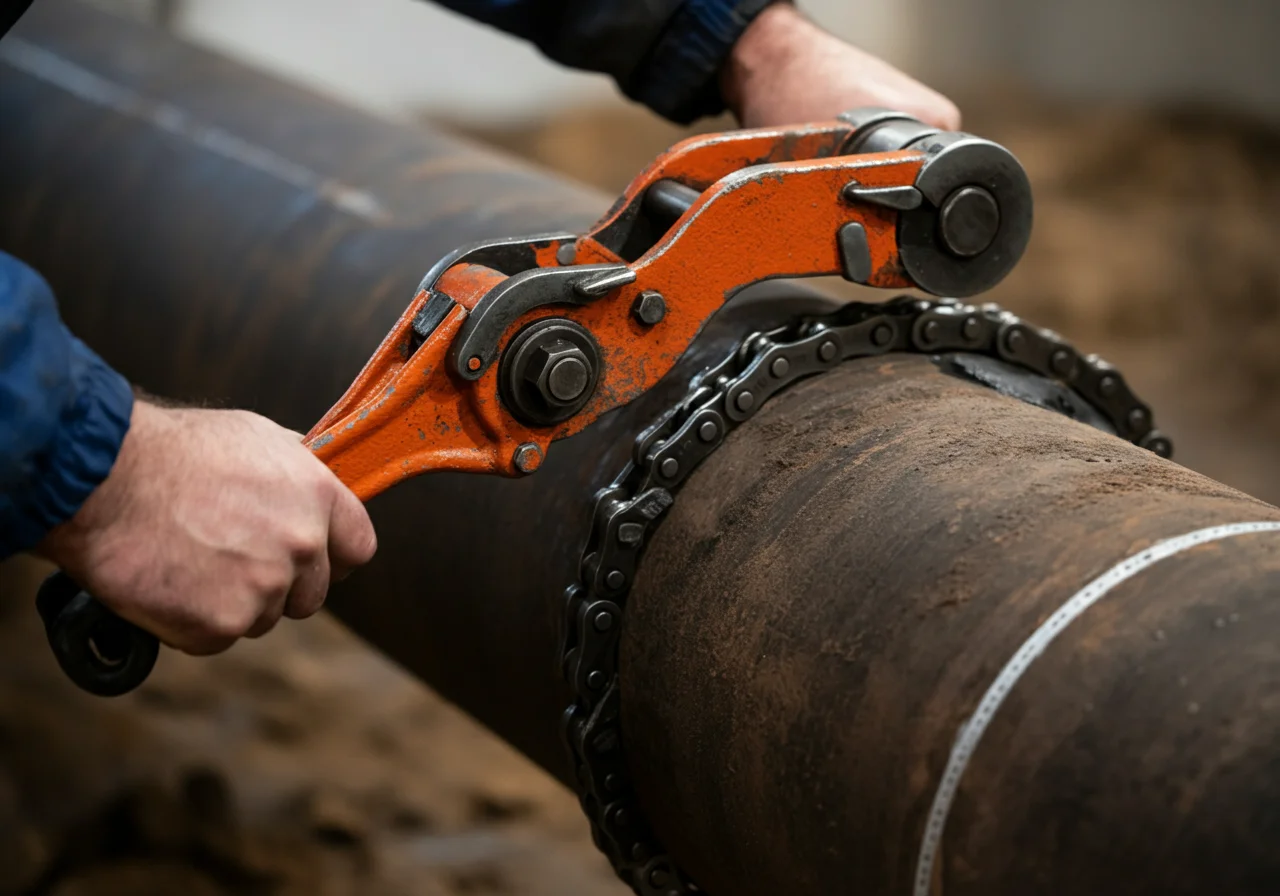
A soil pipe cutter is the essential tool for severing cast iron drain lines, especially in the confined, demanding environment of a trench. The choice between models like the Ridgid 226 and 246 snap cutters is not trivial; it directly impacts job efficiency, safety, and cut quality. This guide provides a technical deep dive into selecting and operating the correct tool for professional-grade cast iron pipe cutting.
Technical Deep Dive: Ridgid 226 vs. 246 Snap Cutter Analysis
Both tools are lever-operated, chain-style snap cutters, but they are engineered for different maximum capacities and leverage requirements. Using the wrong tool can result in an incomplete cut, damaged chain links, or personal injury.
Ridgid 226 Soil Pipe Cutter
- Capacity: 1½” to 6″ Cast Iron Soil Pipe (CISP).
- Mechanism: Single-pivot lever. The cutting force is applied directly through a single hinge point.
- Trench Application: Ideal for standard 4″ and 6″ residential main lines and smaller branch lines. Its more compact size can be an advantage in tight trenches.
- Key Limitation: Requires significantly more user force on the lever to achieve a clean snap on 6″ pipe, especially older, thicker-walled cast iron.
Ridgid 246 Soil Pipe Cutter
- Capacity: 2″ to 6″ Cast Iron Soil Pipe (CISP).
- Mechanism: Compound leverage (toggle-action). This design multiplies the input force, making it dramatically easier to cut.
- Trench Application: The professional’s choice for all 4″ and 6″ cuts. The reduced effort translates to faster work, less fatigue, and a higher certainty of a clean break in challenging conditions.
- Key Advantage: Superior mechanical advantage. For the same user effort, the 246 applies far greater force to the cutting wheels.
| Feature | Ridgid 226 | Ridgid 246 |
|---|---|---|
| Capacity Range | 1½” – 6″ | 2″ – 6″ |
| Leverage Type | Single-Pivot | Compound (Toggle-Action) |
| Primary Use Case | Residential, lighter-duty 6″ cuts | Commercial/Residential, all 4″ & 6″ cuts |
| User Effort (6″ Pipe) | High | Moderate |
| Tool Weight & Size | Relatively Compact | Larger, Heavier Frame |
Step-by-Step Field Procedure for a Clean Snap Cut
- Site Preparation: Expose a minimum of 12 inches of pipe around the cut area. Remove all dirt, rocks, and debris. Support the pipe on both sides of the intended cut to prevent sagging and binding the tool.
- Tool Setup: Open the cutter’s chain and wrap it around the pipe. Ensure the cutting wheels are aligned perpendicular to the pipe axis. Connect the chain links hand-tight.
- Initial Scoring & Tightening: Apply steady pressure on the lever to seat the cutting wheels into the pipe wall. Tighten the chain adjustment one notch. Rotate the entire tool 5-10 degrees around the pipe and repeat. Continue this “score-and-adjust” pattern until the tool is snug.
- The Final Snap: Once a consistent score line is established around the entire circumference, apply firm, steady pressure on the lever. With a proper tool (like the 246 on 6″ pipe), a distinct “snap” will occur. Do not use hammering or jumping on the lever.
- Post-Cut Inspection: Examine the cut edge. A proper snap cut will leave a clean, square edge with minimal burr. Deburr the inside edge with a file to prevent waste buildup.
⚠️ Mandatory Safety Protocol
1. Utility Clearance: Before excavation or cutting, call 811 for underground utility marking. Cutting a live gas or electrical line is catastrophic.
2. Trench Safety: Adhere to OSHA trenching standards (29 CFR 1926.650-652). Use proper shoring or sloping in trenches over 5 feet deep.
3. Personal Protective Equipment (PPE): Wear ANSI Z87.1 safety glasses, heavy-duty gloves, and steel-toe boots. Cast iron shards are sharp.
4. Tool Integrity: Inspect the cutter chain and cutting wheels for cracks or excessive wear before each use. A failed chain under tension is a severe hazard.
Code & Compliance: Why the Right Cut Matters
The integrity of the cut is not just about convenience; it’s a code compliance issue. A poorly cut pipe can lead to failed joints and leaks.
- IPC/UPC §705.7 (Joint Preparation): Pipes must be cut square to ensure proper engagement in hub-and-spigot joints or shielded coupling connections. A beveled or ragged cut compromises the seal.
- IPC §306.3 / UPC §206.1 (Support): Pipes must be properly supported. The cutting process must not create cracks or weaknesses that would cause the pipe to sag under load, violating support intervals.
A clean snap from a correctly sized, powerful snap cutter is the only method that reliably meets these requirements in the field without secondary machining.
Toolbox: Essential Gear for Cast Iron Work
- Primary Cutter: For all-around professional use, the Ridgid 246 is the definitive choice. Its compound leverage is non-negotiable for frequent 4″ and 6″ cuts.
- Alternative/Backup: A high-quality reciprocating saw (e.g., Milwaukee M18 Fuel) with long, carbide-grit blades for cuts where a snap cutter cannot fit.
- Inspection & Finishing: A bright, cordless work light (Ridgid or Milwaukee), a flat file for deburring, and a quality tape measure.
External Reference: Manufacturer & Safety Data
For definitive specifications, maintenance instructions, and safety warnings, always consult the official manufacturer literature.
– Ridgid Tool Support & Manuals (Official source for 226/246 manuals)
– OSHA Standard 1926.650 – Trenching and Excavation (Mandatory safety compliance)
Conclusion: The Professional’s Verdict
While both the Ridgid 226 and 246 are capable soil pipe cutters, the mechanical reality of cutting cast iron in a trench dictates the superior tool. For any tradesperson regularly facing 4″ or 6″ cast iron, the Ridgid 246 with its compound-action snap cutter design is the efficient, code-compliant, and physically sustainable choice. It transforms a high-effort struggle into a controlled, reliable procedure, ensuring clean breaks that form the foundation of a leak-free drainage system.