Stud Drilling Rules
The Diagnosis: Understanding Framing Penetration Limits
Proper Stud Drilling Rules are the non-negotiable foundation for maintaining a building’s structural integrity when running plumbing, electrical, or HVAC lines through wood framing. Incorrectly sized or placed holes and notches can critically weaken studs and joists, leading to costly repairs and potential safety hazards. This guide details the precise limitations for both load-bearing and non-load-bearing members, as codified in the International Residential Code (IRC) and best trade practices.
Technical Deep Dive: Code-Compliant Drilling and Notching
The rules differ based on whether the framing member is in a wall (stud) or a floor/ceiling (joist), and whether it is load-bearing. The following procedures and dimensions are mandatory for professional work.
1. Drilling Holes in Wood Studs
- Load-Bearing Studs: The maximum hole diameter is 40% of the stud depth. For a standard 2×4 stud (3.5″ deep), the largest allowable hole is 1.4″ in diameter. The hole must be centered in the stud’s width, with a minimum edge distance of 5/8″ from the face of the stud.
- Non-Load-Bearing Studs: Holes can be up to 60% of the stud depth. In a 2×4, this allows a 2.1″ hole. While centering is still best practice, edge distance requirements are less stringent, but a minimum of 5/8″ should be maintained for practical fastener clearance.
- Location: Holes should be drilled in the center third of the stud’s height. Avoid drilling within the top or bottom plate connection areas where stress is concentrated.
2. Notching and Drilling Wood Joists
Floor and ceiling joists are highly engineered for bending strength; compromising their top (compression) or bottom (tension) edges is particularly dangerous.
- Holes in Joists: Holes must be drilled in the center third of the joist depth only. The diameter must not exceed one-third the depth of the joist. A hole in a 2×10 joist (9.25″ deep) is thus limited to 3.1″. The hole must be at least 2″ from the top and bottom edges.
- Joist Notching: Notches are only permitted in the outer third of the joist span, never in the middle third. Maximum notch depth is one-sixth the joist depth. Maximum length is one-third the joist depth. Notches at the ends (top only) cannot exceed one-fourth the depth.
| Framing Member | Operation | Maximum Size (Typical 2×4 / 2×10) | Permitted Location |
|---|---|---|---|
| Load-Bearing Stud | Hole Diameter | 40% of depth (1.4″) | Centered, middle third of height |
| Non-Load-Bearing Stud | Hole Diameter | 60% of depth (2.1″) | Centered |
| Floor Joist | Hole Diameter | 33% of depth (3.1″ in 2×10) | Center third of depth, any span location |
| Floor Joist | Notch Depth | 16.7% of depth (1.5″ in 2×10) | Outer third of span only |
Code & Compliance: IRC and IBC Citations
These rules are not suggestions; they are enforceable code requirements designed to preserve Structural Integrity.
- IRC R602.6 Drilling and Notching of Studs: This section explicitly defines the 40% and 60% hole diameter limits for bearing and non-bearing studs, and the 5/8″ edge distance.
- IRC R502.8 & R802.7 Drilling and Notching of Joists: These sections govern floor and ceiling joists, respectively, detailing the strict zone-based rules for holes and notches. Joist Notching in the middle third of the span or depth is prohibited.
- Structural Reinforcement: If an existing hole or notch exceeds code, or a new penetration must be larger, the member must be reinforced. This typically involves sistering a new full-length member alongside the compromised one or installing a rated structural steel plate. Consult a structural engineer for solutions.
Toolbox: Precision Tools for the Job
Using the right tools ensures clean, accurate penetrations that minimize wood fiber tear-out and stress concentrations.
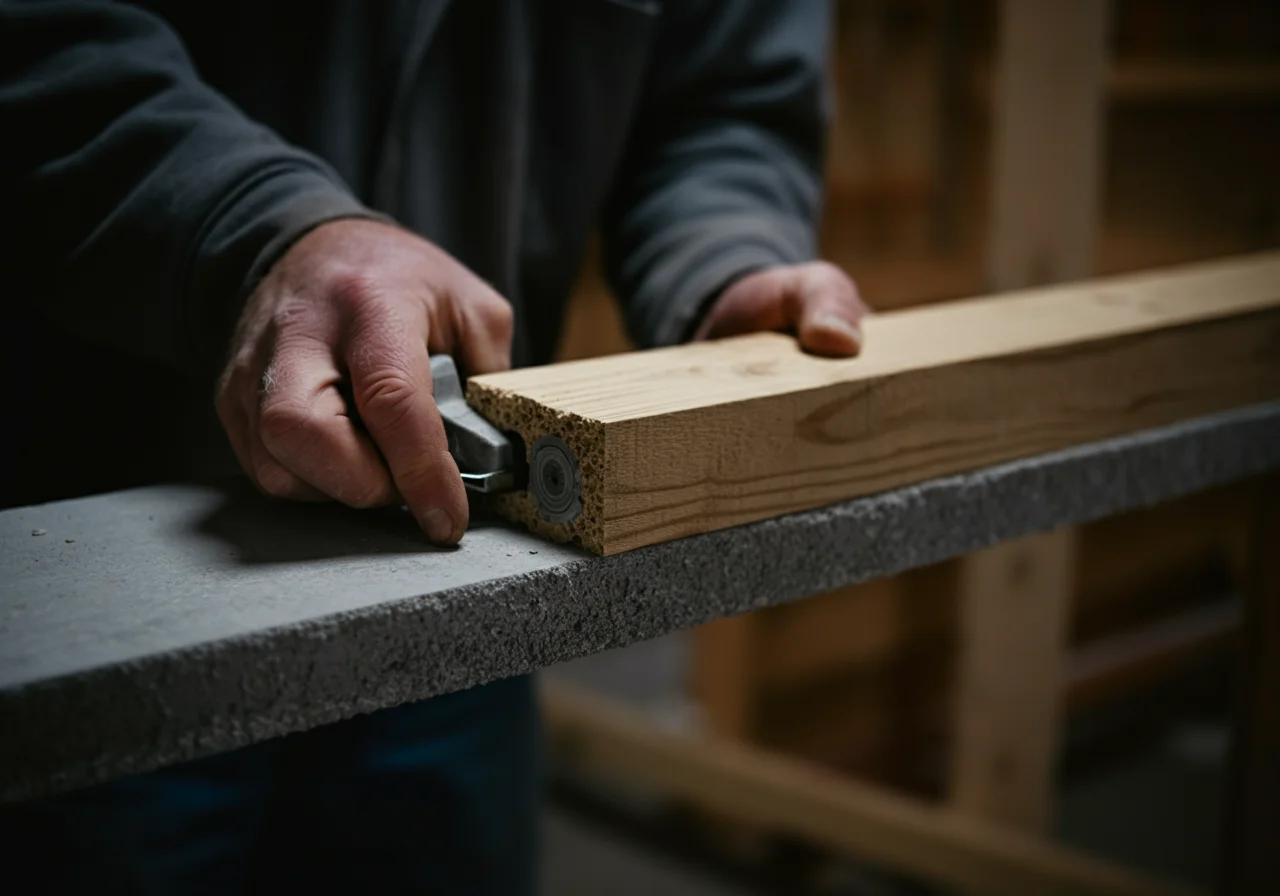
- Auger Bits & Hole Saws: For clean, precise holes. Use sharp, high-quality bits from brands like Milwaukee or Irwin. A self-feeding auger bit is ideal for deep, straight holes in studs.
- Stud Finder & Scanner: A professional-grade stud finder with deep-scan and AC wire detection capabilities, such as those from Franklin Sensors or Zircon, is critical for locating studs, joists, and hidden utilities before cutting.
- Layout Tools: A reliable torpedo level and a sharp pencil for marking hole centers and depths accurately.
Safety Warning
ALWAYS verify there are no electrical wires, plumbing lines, or gas pipes inside the cavity before drilling or cutting. Use a utility scanner. For joist work, ensure the area is properly shored and that you are using fall protection when working off the ground. Failure to locate utilities can result in electrocution, flooding, or gas leaks.
External References
For the definitive code language and diagrams, always refer to the primary source. The International Code Council provides a comprehensive overview of framing provisions:
ICC Digital Codes: IRC Chapter 6 – Wall Construction. This resource contains the full text of the codes referenced in this guide.