Tool Theft Prevention
The Diagnosis: A Direct Threat to Your Livelihood
Tool theft prevention is not a matter of optional security; it is a critical operational requirement for any tradesperson. The loss of tools represents a direct financial hit, project delays, and a compromise of professional capability. Effective prevention requires a layered approach, combining robust physical security for your primary mobile workshop—your van—with intelligent asset tracking technology. This guide details the technical implementation of van security systems and GPS trackers to protect your investment.
Technical Deep Dive: A Layered Security Protocol
A single lock is not a system. Professional-grade tool theft prevention requires creating multiple, independent barriers to slow down and deter thieves, while enabling recovery. Implement these layers in sequence.
Layer 1: Hardening the Van’s Perimeter
This is your first and most visible line of defense. The goal is to make unauthorized entry as difficult, loud, and time-consuming as possible.
- Door Locks: Replace factory-installed locks with high-security alternatives. Puck locks (also known as circular locks) are a superior choice for rear and side cargo doors. Their design resists prying, drilling, and bolt-cutter attacks far more effectively than standard latch-style locks. Brands like Milwaukee and Ridgid offer robust puck lock systems.
- Internal Partitions: Install a solid, welded steel partition between the cab and cargo area. This serves two critical functions: it prevents access to tools from a smashed cab window, and it protects the driver in a collision from unsecured cargo. Ensure any partition complies with vehicle safety standards.
- Window Security: Apply a professional-grade perforated vinyl film to all cargo area windows. This maintains outward visibility for driving while obscuring the view of tools inside. For added security, install steel mesh or bars behind the glass.
- External Lighting: Install motion-activated, weatherproof LED floodlights on the sides and rear of the van. Thieves favor darkness; a sudden blast of light is a powerful deterrent.
Layer 2: Internal Van Security and Compartmentalization
If a thief breaches the shell, your goal is to prevent easy, bulk removal of tools.
- Job-Site Boxes: Store the most valuable and portable tools (e.g., cordless tool kits, meters) in heavy-duty, lockable job-site boxes like those from Milwaukee Packout or DeWalt TSTAK. Bolt these boxes to the van’s floor or wall studs using security-grade fasteners.
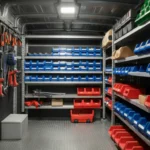
- Custom Shelving with Locking Doors: Secure all shelving units with lockable doors. Use different locks (e.g., a key for shelves, a combo for boxes) to complicate a thief’s process.
- Vehicle Immobilizer: Install a hidden fuel cut-off switch or an electronic ignition kill switch. This prevents the entire van from being driven away, turning a theft of contents into a potential total loss.
Layer 3: Covert Tracking and Recovery Systems
This layer acts as your last-resort recovery mechanism and provides critical intelligence.
- Hardwired Vehicle GPS Tracker: Install a device that is hardwired into the van’s electrical system, often with a backup battery. It provides real-time location, geofencing alerts (if the van moves from a designated area), and movement alerts. Choose a service with a reliable cellular network and a discreet, professionally installed unit.
- Asset GPS Tags: For high-value individual items (e.g., a welder, a large diagnostic computer), use Bluetooth or cellular-enabled GPS tags. These can be hidden inside equipment. Bluetooth tags (like Apple AirTag or Tile) rely on a network of smartphones to report location, while dedicated cellular GPS tags provide independent, real-time tracking but require a subscription.
- Procedure: When a theft occurs, the sequence is: 1) Immediately use the tracking app to get the real-time location. 2) Contact law enforcement immediately. Do not attempt confrontation. 3) Provide the police with the live tracking data, vehicle description, and a detailed inventory list.
Code & Compliance: Insurance and Best Practices
While no specific plumbing or mechanical code governs tool storage, adherence to best practices impacts insurance and liability.
- Insurance Requirements: Many commercial auto and inland marine (tool) insurance policies have specific requirements for overnight parking (e.g., off-street, lighted lot) and security devices. Failure to comply can void a claim. Document your security system with photos and receipts.
- OSHA 1926.20(a)(1) & General Duty Clause: Requires employers to provide a place of employment free from recognized hazards. This can be interpreted to include securing tools and materials on-site to prevent theft-related hazards like abandoned equipment or trip hazards from ransacked storage.
- Inventory Documentation: Maintain a digital inventory log with make, model, serial number, and purchase receipts. This is required for police reports and insurance claims. Photograph all tools and their serial numbers.
Toolbox: Essential Security Gear
| Category | Example Product Types | Purpose |
|---|---|---|
| Physical Locks | High-Security Puck Locks, Heavy-Duty Padlocks (Shackless) | Deny physical access to doors and storage boxes. |
| Tracking & Monitoring | Hardwired Vehicle GPS Tracker, Cellular Asset Tags | Enable recovery and provide movement alerts. |
| Storage & Mounting | Lockable Job-Site Box Systems (e.g., Packout), Steel Security Partitions | Compartmentalize and secure tools within the van. |
| Deterrence | Motion-Activated LED Flood Lights, Perforated Window Film | Increase visibility risk and hide contents from view. |
Safety Warning & Operational Discipline
SAFETY WARNING: When installing any hardwired electrical component (GPS tracker, lights), always disconnect the vehicle’s battery to prevent short circuits, electrical fires, or damage to the vehicle’s ECU. For physical modifications like partition installation, ensure the vehicle is on a level surface with the parking brake firmly engaged.
Technology is useless without procedure. The most critical step is consistent habit: always lock every door and compartment, never leave tools visible overnight, and park in a well-lit, secure area whenever possible. Treat your van like a rolling bank vault.
External Reference
For an official perspective on securing business assets and reporting theft, review the resources provided by the U.S. Government’s portal on business crime prevention. This includes guidance on documentation and working with law enforcement.