Upselling Filtration
The Diagnosis: Ethical Revenue Growth Through Water Quality Consultation
Upselling filtration is not a sales tactic but a professional consultation process. It involves identifying a customer’s latent water quality issues during a routine service call and presenting technically sound, code-compliant solutions that protect their plumbing system and health. For the professional tradesperson, this represents a significant, ethical revenue stream built on expertise and trust, moving beyond simple repairs to becoming a holistic water systems advisor.
Technical Deep Dive: The Systematic Consultation Protocol
Effective upselling is a diagnostic, evidence-based conversation. Follow this step-by-step protocol to transition from service technician to trusted consultant.
- Step 1: Visual Inspection & System Interrogation. Before mentioning any product, perform a thorough inspection. Check for:
- Scale Buildup: Inspect the interior of toilet tanks, showerheads, and the heating elements in water heaters. Heavy limescale is a primary indicator for a water softener.
- Staining: Blue-green stains on fixtures indicate corrosive (low pH) water, requiring acid-neutralization. Red-brown stains signal dissolved iron.
- Fixture Performance: Note low flow rates at aerators, which can be caused by sediment or scale.
- Appliance Lifespan: Ask about the service history of their water heater, dishwasher, and washing machine. Premature failure often links to water quality.
- Step 2: The Evidence-Based Conversation. Use your findings to educate, not sell. For example: “I’m here for the leaky faucet, but I’m also noticing significant scale buildup in your toilet tank. This same mineral content is reducing your water heater’s efficiency and will shorten the lifespan of all your water-using appliances.”
- Step 3: Present the Solution Spectrum. Offer tiered solutions based on the diagnosed problem.
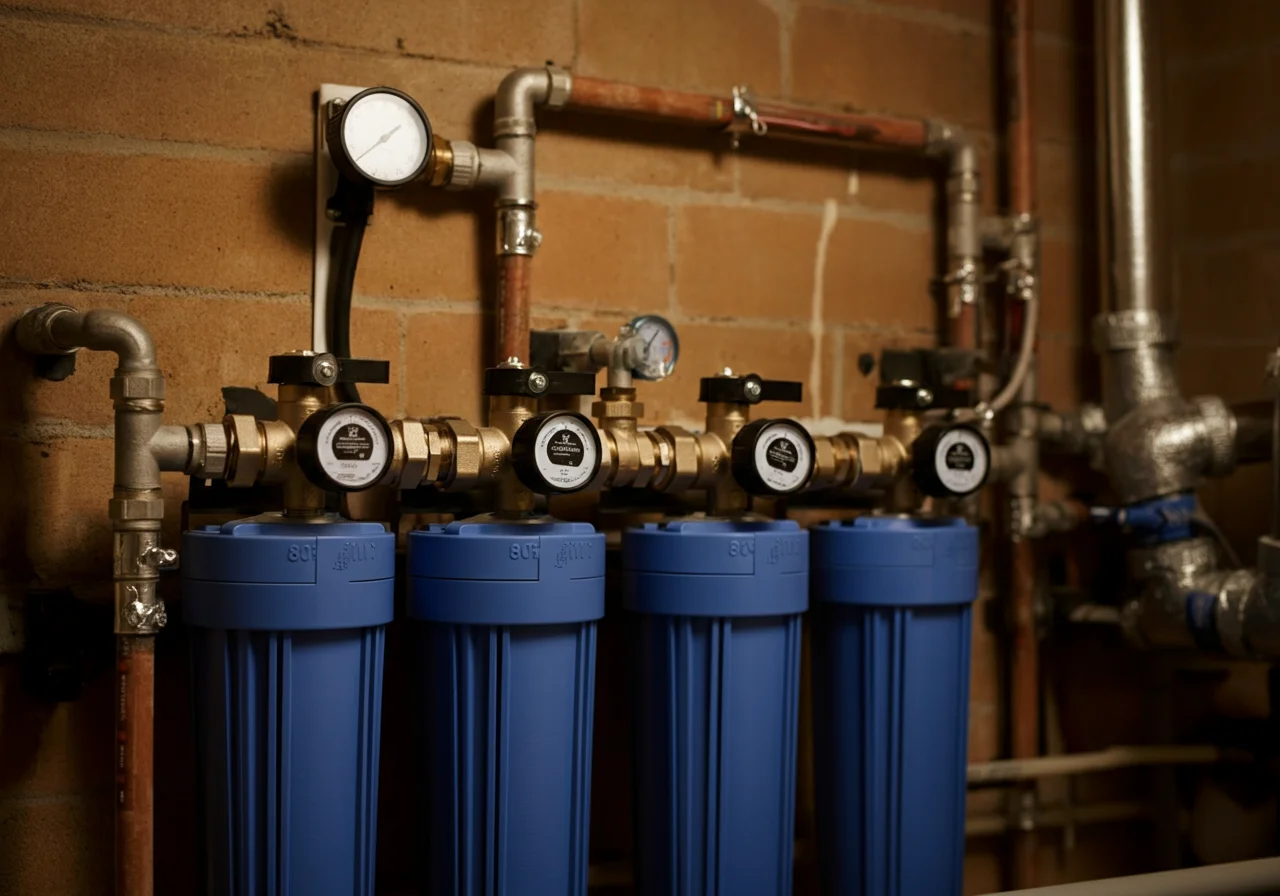
Problem Identified Technical Solution Key Benefit Hardness (Calcium/Magnesium) Ion-Exchange Water Softener Prevents scale, improves soap efficiency, extends appliance life. Sediment (Sand, Silt, Rust) Cartridge or Backwashing Sediment Filter Protects valves, cartridges, and downstream equipment. Chlorine Taste/Odor, VOCs Catalytic Carbon Filter Improves taste/odor and removes specific chemicals. Acidic Water (Low pH) Acid-Neutralizing Filter (Calcite) Prevents corrosion of copper pipes and fixtures. - Step 4: Professional Installation Scoping. Discuss installation requirements: bypass loops, drain access, electrical outlet for electronic control heads, and proper support. Use a Milwaukee M12 FUEL™ installation driver for efficient work in tight spaces.
Code & Compliance: The Foundation of Professional Recommendations
Your authority stems from code knowledge. Citing standards justifies your recommendations and ensures system safety.
- IPC & UPC Protection: Both the International Plumbing Code (IPC) and Uniform Plumbing Code (UPC) mandate the protection of plumbing systems. Scale accumulation can restrict flow (violating pipe sizing requirements), and corrosive water can lead to leaks and contamination. Recommending a softener or neutralizer is a proactive measure for code compliance.
- NEC & Electrical Safety: Any filtration system requiring electrical connection (e.g., a softener control head) must be installed per National Electrical Code (NEC) Article 422, with proper GFCI protection where required.
- Backflow Prevention: UPC Section 603.4.7 and IPC Section 608.3 require an approved air gap or backflow preventer on the drain line connection for water treatment equipment to prevent drain water from siphoning back into the system. Always install a Ridgid or equivalent air gap fitting.
Toolbox: Essential Gear for Water Quality Assessment
Carry these tools to move from speculation to data-driven consultation.
- Water Test Kits: Use professional-grade total hardness test strips and iron test kits for immediate, demonstrable evidence.
- Digital TDS Meter: Measures Total Dissolved Solids, a general indicator of water mineral content.
- Pressure Gauge: A Ridgid model to check for pressure drops that may indicate clogging from sediment.
- Documentation: Use a tablet to show manufacturers’ cutaway diagrams or performance data sheets from brands like Watts or Pentair.
Safety Warning: The Non-Negotiable First Step
Before inspecting or discussing any work that involves the main water supply, you must locate and verify the shut-off valve is operational. For any electrical testing or installation related to system controls, shut off power at the circuit breaker and verify with a non-contact voltage tester like a Fluke model. Never bypass safety protocols for convenience.
Building Ethical Revenue: The Long-Term Value Model
View upselling filtration as building annuity-like revenue. A properly installed system leads to:
- Recurring Service Revenue: Salt delivery for softeners, scheduled filter changes (sediment, carbon), and annual system sanitization.
- Increased Customer Lifetime Value: A customer with a whole-house system is a retained client for all their plumbing needs.
- Referral Generation: A solved water quality problem is a high-impact result that customers readily recommend.
The most ethical approach is to present the solution as an investment in system longevity and home health, with clear ROI on appliance protection and energy savings, rather than as an optional accessory.
External Reference for Technical Definitions
For a definitive, technical explanation of water hardness and its effects, which is central to recommending a softener, consult the U.S. Geological Survey Water Science School page on water hardness. This .gov resource provides authoritative, non-commercial background information you can reference in customer discussions.