Water Heater Pan Drain
The Diagnosis: Mandatory Secondary Containment for Leak Protection
A water heater pan drain is a critical, code-mandated safety system. Its sole purpose is to provide secondary containment and controlled drainage for catastrophic leaks or chronic condensation from a water heater tank, preventing extensive water damage to the structure. Failure to install a pan and drain correctly is a common code violation that can lead to thousands of dollars in property damage and mold remediation costs.
Technical Deep Dive: Installing a Code-Compliant Drain Pan System
Proper installation is not optional. Follow this step-by-step guide to ensure your system meets professional standards.
- Step 1: Pan Selection & Sizing: The drain pan must extend a minimum of 2 inches beyond the water heater’s jacket on all sides (IPC 504.7). It must be constructed of a corrosion-resistant material (galvanized steel, PVC, polyethylene) with a minimum depth to provide adequate volume. For a standard 50-gallon heater, a pan with a 3-4 gallon capacity is typical.
- Step 2: Pan Placement & Drain Outlet: The pan must be installed under the water heater on a level, structurally sound floor. The drain outlet must be located at the lowest point of the pan’s sloped bottom. Critical: The pan must be pitched a minimum of 1/4 inch per foot toward the drain outlet to ensure complete drainage (IPC 504.7).
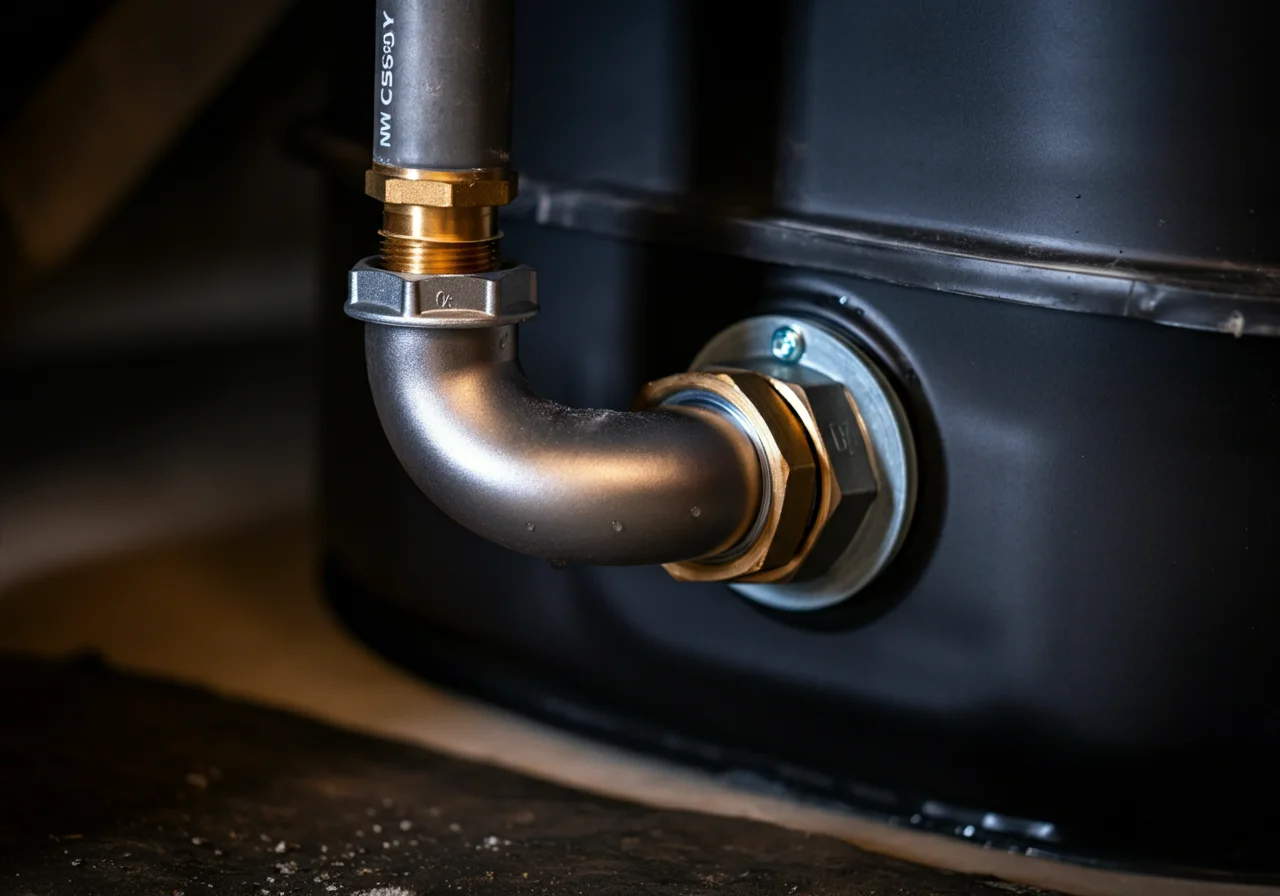
- Step 3: Drain Line Installation: Connect a minimum 3/4-inch nominal diameter pipe or tubing (e.g., PVC Schedule 40, CPVC, or polyethylene) to the pan’s outlet. Use a watertight connection, typically a threaded adapter and a compatible male fitting sealed with Teflon tape or pipe dope. The drain line itself must maintain a continuous downward slope.
- Step 4: Termination Point (The Most Critical Code Rule): The water heater pan drain line must terminate at a “conspicuous location” (IPC 504.7). This is non-negotiable. Acceptable termination points include:
- An indirect waste receptor (floor sink, mop basin).
- A trapped and vented floor drain.
- The exterior of the building, above grade, in a location where discharge will be noticeable.
- **Never** terminate the line into a sewer line, sanitary drain, or a sump pit used for stormwater unless specifically approved by the local Authority Having Jurisdiction (AHJ). The discharge must be observable to alert occupants of a leak.
- Step 5: Testing: After installation, pour several gallons of water into the pan to verify positive flow through the entire drain line to the termination point. Check for any sags or back-pitch in the line that could cause standing water.
Code & Compliance: The Legal Requirements
Adherence to the International Plumbing Code (IPC) or Uniform Plumbing Code (UPC) is required for permitting and inspection. Key sections include:
| Code Reference | Requirement | Rationale |
|---|---|---|
| IPC 504.7 / UPC 510.5 | Mandates a drain pan for water heaters located in interiors, attics, or any location where leakage could cause damage. | Prevents structural damage, mold growth, and damage to adjacent units in multi-family dwellings. |
| IPC 504.7 | Pan must be not less than 1-1/2 inches deep and extend not less than 2 inches beyond the equipment. | Provides sufficient containment volume for initial leak detection and response. |
| IPC 504.7 | Drain pipe must be a minimum of 3/4″ and discharge to a conspicuous location. | Ensures adequate flow capacity and provides a visual alarm (water discharging) to indicate a failure. |
| IPC 307.2.1 / UPC 312.2 | Indirect waste pipes (like pan drains) must discharge through an air gap. | Prevents back-siphonage and contamination of potable water systems, maintaining sanitary separation. |
Local Amendments: Always check with your local building department. Some jurisdictions may have stricter rules, such as requiring a secondary drain line from a leak detection sensor in the pan, or specifying exact exterior termination heights.
Toolbox: Professional-Grade Equipment
Using the right tools ensures a leak-free, durable installation.
- Level & Measuring Tools: A high-quality torpedo level (Milwaukee magnetic levels are a jobsite staple) is essential for setting the correct pan and pipe pitch.
- Pipe Cutting & Joining: For plastic pipe (PVC/CPVC), use a ratcheting plastic pipe cutter (Ridgid) for clean, square cuts. Use the appropriate primer and solvent cement for the material.
- Leak Detection (Proactive Measure): Consider installing a wireless water alarm (e.g., Fluke or similar industrial-grade sensors) inside the drain pan for immediate electronic notification of moisture.
Safety Warning
Before beginning any work, SHUT OFF the power to an electric water heater at the circuit breaker or the gas supply to a gas water heater. SHUT OFF the cold water inlet valve and relieve pressure by opening a hot water faucet. Draining a water heater involves handling very hot water and heavy equipment; use proper personal protective equipment (PPE) including gloves and safety glasses.
External References
For definitive code language and detailed specifications, always refer to the primary source. The International Code Council provides access to code commentaries and updates:
ICC Digital Codes: IPC Chapter 5 – Water Heaters. This link directs you to the official 2021 IPC, specifically the chapter governing water heater and drain pan installation.