Water Service Depth: The Non-Negotiable Defense Against Freeze Damage
Water service depth is the minimum required burial depth for a potable water supply line, mandated by plumbing code to protect the pipe from freezing, physical damage, and contamination. The single most critical factor determining this depth is the local frost line—the maximum depth ground water freezes in winter. Installing a line above this depth is a guaranteed failure. This guide details the IPC requirements, proper trenching techniques, and the engineering rationale behind burying water service lines correctly.
The Diagnosis: Why Depth is Critical
A shallow water service line is a time bomb. When water freezes, it expands with approximately 9% more volume, generating immense pressure (easily exceeding 40,000 psi) that will split copper, crack PVC, and rupture PEX. The resulting leak may not be discovered until a thaw, causing extensive property damage and service interruption. The International Plumbing Code (IPC) provides the baseline standard, but local amendments based on regional frost depth data are always authoritative.
Technical Deep Dive: Determining and Executing Correct Burial
Correct installation is a three-phase process: research, excavation, and bedding.
Phase 1: Research & Planning
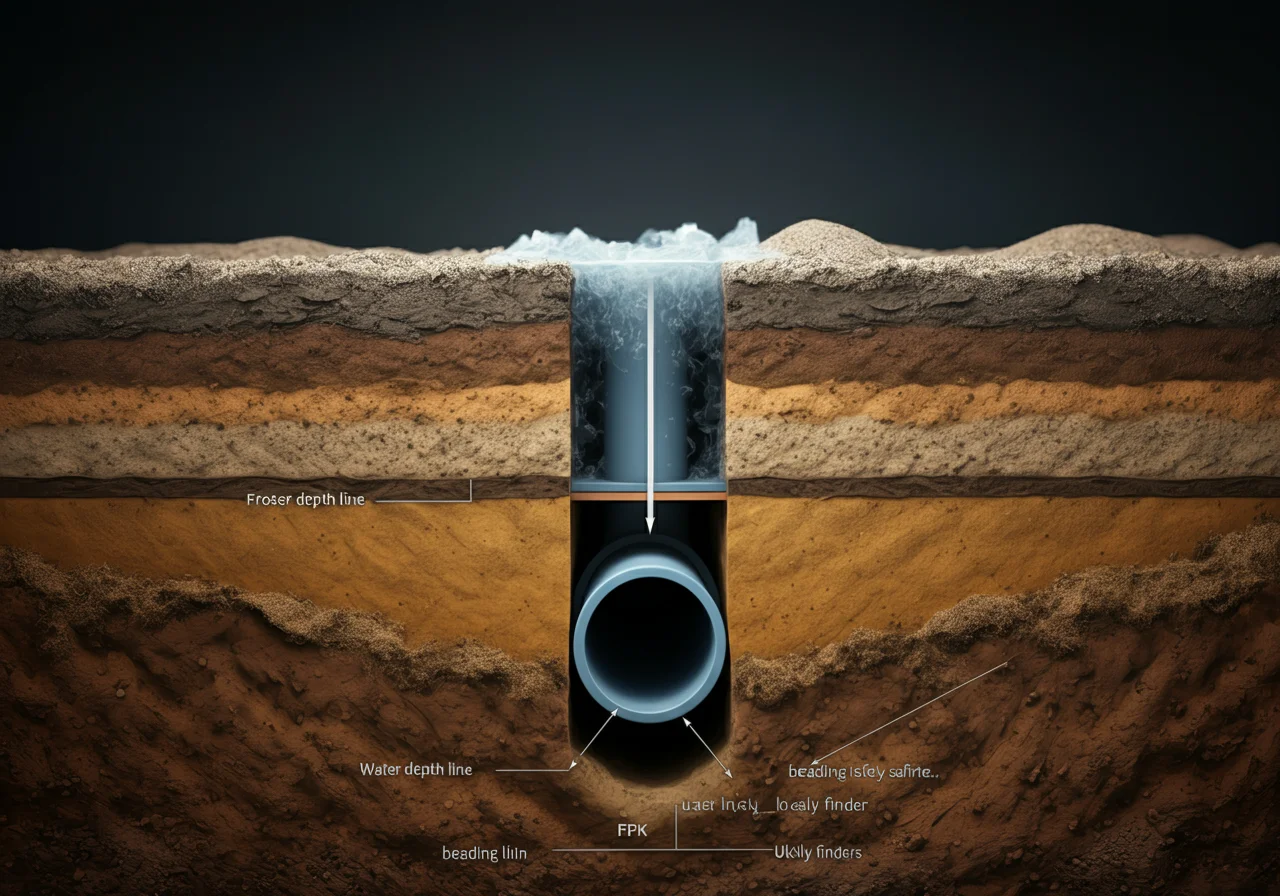
- Identify Local Frost Line: The IPC Table 305.4 provides minimum cover requirements of 12 inches, but mandates 6 inches below the local frost line. You must obtain the official frost depth from your local building department. In northern climates, this can be 48 inches or more.
- Check Local Amendments: Municipalities often exceed IPC minimums. Your permit office has the final say.
- Select Approved Pipe: For underground service, common approved materials include Type K copper, CTS polyethylene (PE), PVC Schedule 40 (for burial), and listed PEX tubing. Ensure the material is rated for direct burial and the local soil conditions.
Phase 2: Trenching & Installation
- Trench Dimensions: The trench width should provide ample working space—typically 12-18 inches wider than the pipe diameter. For a 1-inch line, a 24-inch wide trench is common practice.
- Depth Execution: Measure depth from the top of the pipe to the finished grade. Your target is frost line depth + 6 inches + pipe diameter. For a 36-inch frost line using 1-inch copper, minimum trench depth is 36″ + 6″ = 42″ to the top of the pipe.
- Bedding: Place a minimum 4-inch layer of clean, compactable bedding material (e.g., sand or fine gravel) in the trench bottom to provide uniform support and protect the pipe from sharp rocks.
- Laying Pipe: Ensure a continuous, downward slope of at least 1/4 inch per foot toward the building to facilitate drainage if the line needs to be blown out. Avoid sharp bends.
- Backfilling: Use clean, rock-free backfill material. Place and compact in 6-inch lifts (layers) to prevent future settling. The first 6-12 inches above the pipe should be select backfill.
Phase 3: Critical Details
- Vertical Risers: Where the pipe rises vertically into the building, protect it with a sleeved penetration through the foundation wall or slab. Insulate the interior portion.
- Marking Tape: Bury a non-metallic warning tape approximately 12 inches below grade but above the pipe to alert future excavators.
Code & Compliance: The Legal Minimums
Adherence to code is not optional; it’s a legal requirement for a passed inspection and insurable work. The primary governing sections are:
- IPC 102.2 & 305.1: Establish that piping must be installed in a workmanlike manner and protected from freezing.
- IPC 305.5: Requires protection from physical damage where piping is subject to exposure or vehicular traffic.
- IPC 306: Details joint construction and testing requirements for underground piping.
IPC Table 305.4: “Minimum Cover Requirements” states: “Buried water piping shall be installed not less than 12 inches (305 mm) deep and not less than 6 inches (152 mm) below the frost line.”
Always defer to the more stringent requirement: local code or IPC.
Toolbox: Essential Equipment for the Job
Using professional-grade tools ensures efficiency, accuracy, and safety.
| Tool Category | Specific Tool & Example Brand | Purpose |
|---|---|---|
| Excavation | Compact Track Loader (CTL) with trenching bucket / Mini-Excavator | For precise, vertical-sided trenching in confined spaces. |
| Measurement & Layout | Laser Level & Grade Rod (Milwaukee), 100-ft Tape Measure | Establishing consistent grade and depth over long runs. |
| Pipe Tools | ProPress Tool (Ridgid) for copper / PEX Expansion Tool | Creating reliable, code-compliant joints quickly. |
| Testing | Hydrostatic Pressure Test Pump | Pressurizing the line to 1.5x working pressure (per IPC) to check for leaks before backfill. |
| Compaction | Plate Compactor / Trench Roller | Properly compacting backfill lifts to prevent settlement. |
Frost Line Data and External Reference
The frost line is not a guess; it is empirical data collected by government agencies. While local building departments are the ultimate source, understanding the science is key. The depth is influenced by soil type, moisture content, snow cover, and seasonal temperature duration.
For a foundational understanding of frost penetration and its engineering implications, review the technical definition and factors from a reliable source: Frost Line on Wikipedia. Remember: This is for educational context only. Always use the depth specified in your local building code for actual installation.
Conclusion: Depth is Insurance
There is no shortcut for proper water service depth. The labor of digging a deeper trench is insignificant compared to the cost and reputational damage of a catastrophic freeze failure. By rigorously determining your local frost line, following IPC and local code for trenching and burial, and using professional techniques, you install a system built for decades of reliable service. This is not just code compliance; it’s the mark of a true craftsman.